

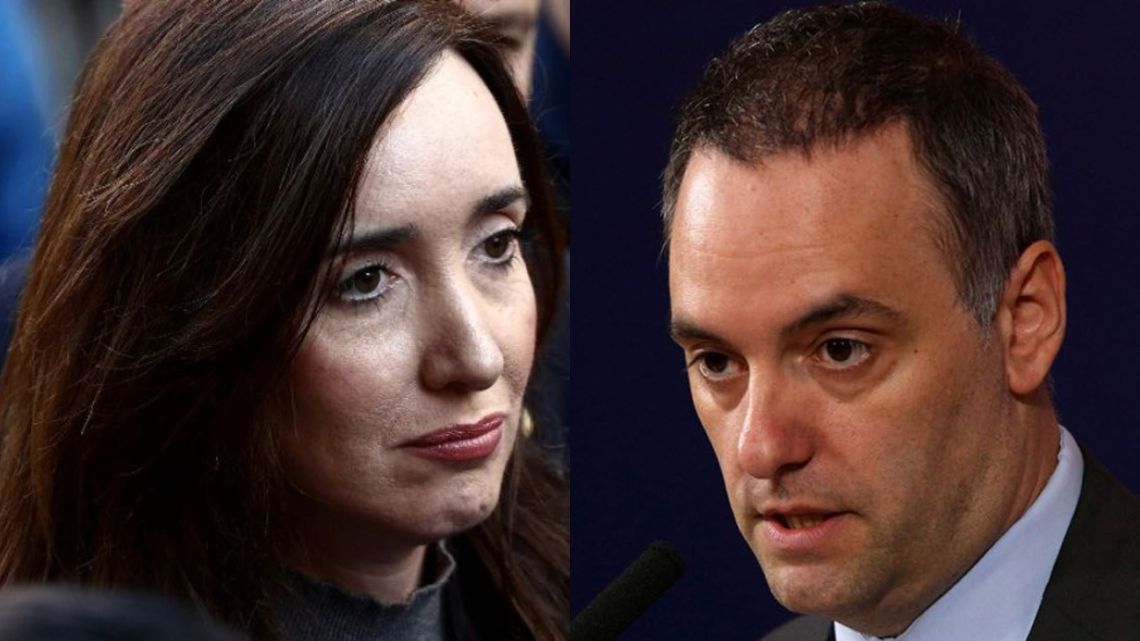
That ties are strained between Argentina’s President Javier Milei and his vice-president has long been public knowledge, but the extent of the breakdown has now been confirmed publicly. According to one top minister, Victoria Villarruel is not even part of the government.
Speaking in a radio interview on Monday, Cabinet Chief Manuel Adorni – Milei’s former spokesperson – said ties were so strained that the VP does not take part in policy discussion, nor is she even considered to be “part of the administration.”
“She is the Vice-President, but she is not part of decision-making, she is not part of the administration and she is not even part of our political roundtable,” Adorni told Radio Rivadavia emphatically.
The minister said that Villarruel had “clearly adopted a position that does not align with our interests” – a reference to a litany of previous spats over the government’s direction and legislative agenda.

The Vice-President and Senate chief “is free to take whichever path she wishes,” added Adorni.
Milei selected Villarruel, a conservative seen as critics as an apologist for the 1976-1983 military dictatorship, as his running-mate in 2023 in a view analysts saw as an attempt to broaden the appeal of his La Libertad Avanza platform. However, tensions soon emerged over policy priorities and power-sharing arrangements within the administration.
After Milei’s 2023 election win, Villarruel expected to play a substantial role in the administration, exerting control over areas of national security and defence. But the President snubbed her, instead assigning those areas to allies and incomers to his ranks.

By late 2024, Milei was publicly admitting that Villarruel had little influence on government decision-making, noting in a televised interview that she had essentially withdrawn from Cabinet meetings.
Last year, the split became more pronounced and Villarruel began openly criticising aspects of Milei’s economic and fiscal approach, distancing herself from government policy. She has also defended the autonomous role of the Senate, overseeing while not promoting the passage of laws Milei opposed.
The latest flashpoint has been Milei’s flagship labour reform package. In recent days, Villarruel posted messages on social media arguing that “without national employment and without national production there are no real government policies.”

The messages were widely seen as a critique of the government’s economic liberalisation model, particularly at a time when local productive sectors are facing difficulties, including company closures and job losses.
In Monday’s interview, Adorni noted that the legislative package would come before the upper chamber for final approval this week. He noted the government had “50 bills” under consideration for regular Congress sessions, which are due to start March 1. A “busy year” lie ahead, he added.
Last week, Villarruel met with La Rioja Province Governor Ricardo Quintela, who hails from the Peronist opposition.
– TIMES/PERFIL










Comments