


Argentina’s lower house of Congress passed President Javier Milei’s signature labour reform bill, a key step in the libertarian’s ambitious agenda that could help the nation return to global markets.
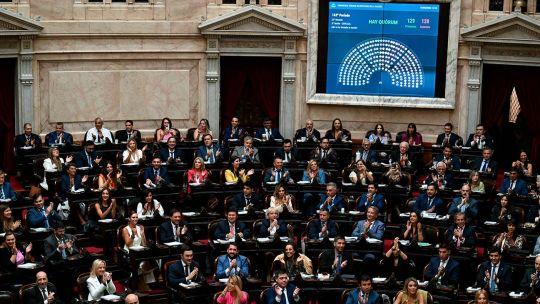
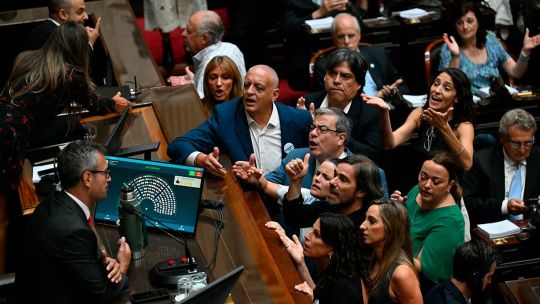
In a 135-115 vote, the lower house approved the landmark legislation early Friday, sending it to the Senate for final approval. To secure support there, Milei stripped out a controversial article that in some cases would have cut pay for sick-leave in half.
Due to the change, the bill must return to the upper chamber, where it already passed after Milei watered down the bill last week.
Amid the debate, the country’s largest umbrella labour union staged a 24-hour strike that affected hundreds of flights and paralysed buses, taxis and trains, leaving the streets of Buenos Aires largely deserted. On Wednesday, the nation’s biggest tyre plant said it would shut down and lay off nearly 1,000 workers before the government ordered mediation.

After scoring a landslide win in October’s midterm elections with the backing of US President Donald Trump, the labour reform is the first big test of Milei’s newfound political muscle. With about a third of members across both houses, Milei recruited lawmakers from more centrist blocs to notch the legislative victory.
Despite the last-minute changes, the labour reform still stands to be one of the biggest overhauls to Argentina’s economy in decades. The legislation rolls back rules from the 1970s around hiring, firing, severance and collective bargaining. Milei hopes the changes will bring a portion of the informal labour sector – by some estimates half of all employees in Argentina work off the books – into formal employment.
Argentine companies have the same number of salaried, payroll jobs that they did a decade ago, even as the overall population is up by three million in that time. Nationwide, formal salaried jobs are down by more than 270,000 since Milei took office, but unemployment has not spiked due partly to a surge in informal employment.

In a regular news conference Thursday morning, International Monetary Fund spokeswoman Julie Kozack said the reform should create jobs, but added “properly mitigating” the transition costs would be important. IMF staff recently visited Buenos Aires to review the government’s US$20-billion programme.
The legislation should also reassure foreign investors that Milei’s economic transformation has staying power beyond his administration, as it digs into long-entrenched workers’ rights that form the bedrock of the Peronist opposition. Approval may lead to lower interest rates and position the government to return to international bond markets after a sovereign default in 2020.
Politically, the legislation marks Milei’s shift from the chainsaw-wielding outsider to a more pragmatic negotiator. To win lawmakers’ support, he already removed controversial articles that would have diminished financing for labour unions. The bill proposes pinpoint changes instead of Milei’s usual approach for fast, sweeping overhauls.

“The reality is that he’s being surgical, this isn’t the chainsaw,” said José Anchorena, former labour undersecretary in the government of business-friendly president Mauricio Macri. “This reform is moderate, but it’s a start, to change some marginal things that have created more informality and funneled economic growth into informality.”
While Anchorena and other labor experts laud the reform as positive, they’re not convinced that it will translate into a corporate hiring spree even with a second year of better than four percent growth. That’s because much of the expansion is in sectors that don’t employ many people, such as agriculture, oil and mining. What’s more likely, they say, is companies will be willing to declare current staff they’d paid informally under the table and put them on the payroll.
Still, the transition could be marked by job losses in some sectors as Milei opens up industries long shielded by protectionist policies to trade that face relatively higher operating costs than their newfound competition from places like China.

“There’s going to be some job losses, surely there’ll also be a shift into other activities – perhaps more services, more retail, less industry and production,” says labour economist Laura Caullo at the IERAL think tank. “There will be more registration, but perhaps not more hiring, and that’s a sensitive issue.”
by Manuela Tobias, Bloomberg








Comments