

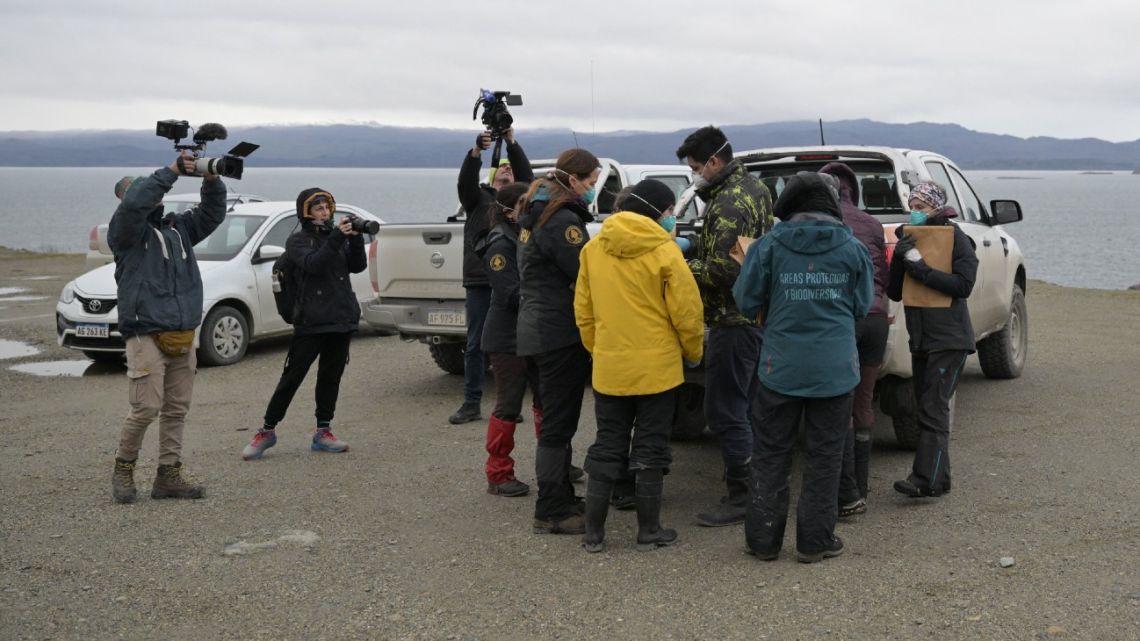
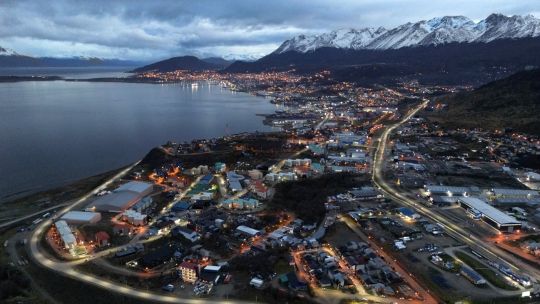
Scientists on Tuesday began collecting rodents in the woods around Ushuaia to search for carriers of hantavirus in the area from which the virus-stricken MV Hondius set sail.
The first of three cruise ship passengers to die from the rodent-borne virus, a Dutchman, spent 48 hours in Ushuaia with his wife before embarking on the cruise, raising suspicions they became infected in Ushuaia.
Biologists from the ANLIS-Malbrán Institute, Argentina's leading center for infectious diseases, collected specimens from dozens of traps they set a day earlier around the picturesque city at the southern tip of South America, including Tierra del Fuego National Park, a vast mountain reserve.
Wearing gloves and masks they placed the traps in sacks and then took them away to take blood and tissue samples that will be sent to Malbrán's headquarters in Buenos Aires for testing.

The samples will be tested for the Andes train of hantavirus detected in several of the Hondius' passengers – the only known strain to spread between people.
The scientists refused on Tuesday to comment on their work but appeared pleased with their yield.
"The traps worked very well," a local health source told AFP.

Local scientists are divided on whether the rodent in question is the long-tailed rat (Oligoryzomys longicaudatus) or a subspecies, the Magellanic long-tailed rat (Oligoryzomys magellanicus).
The rodent in the area, which resembles a field mouse, measures 6-8 centimetres (2.4-3.1 inches) and has a tail that can reach 15 cm.
It is nocturnal, lives in wooded areas and feeds on fruits and seeds.

The scientists will continue laying up to 150 traps each night throughout the week in order to glean a sufficiently large sample for the results to be representative.
The results are expected in as much as a month.
The hantavirus outbreak aboard the Hondius, which set sail from Ushuaia on April 1, triggered a global health scare.

Three passengers died from the virus, for which no vaccines nor specific treatments exist.
The World Health Organization has sought to reassure the world that the outbreak is not a repeat of the Covid pandemic.
Officials in Tierra del Fuego Province have downplayed the likelihood that the Dutchman became infected in Ushuaia.

The province has not had a case of hantavirus since its reporting became mandatory 30 years ago.
The Andes strain is however present in provinces over 1,000 kilometres away in the north, such as Rio Negro and Chubut.
– TIMES/AFP














Comments