

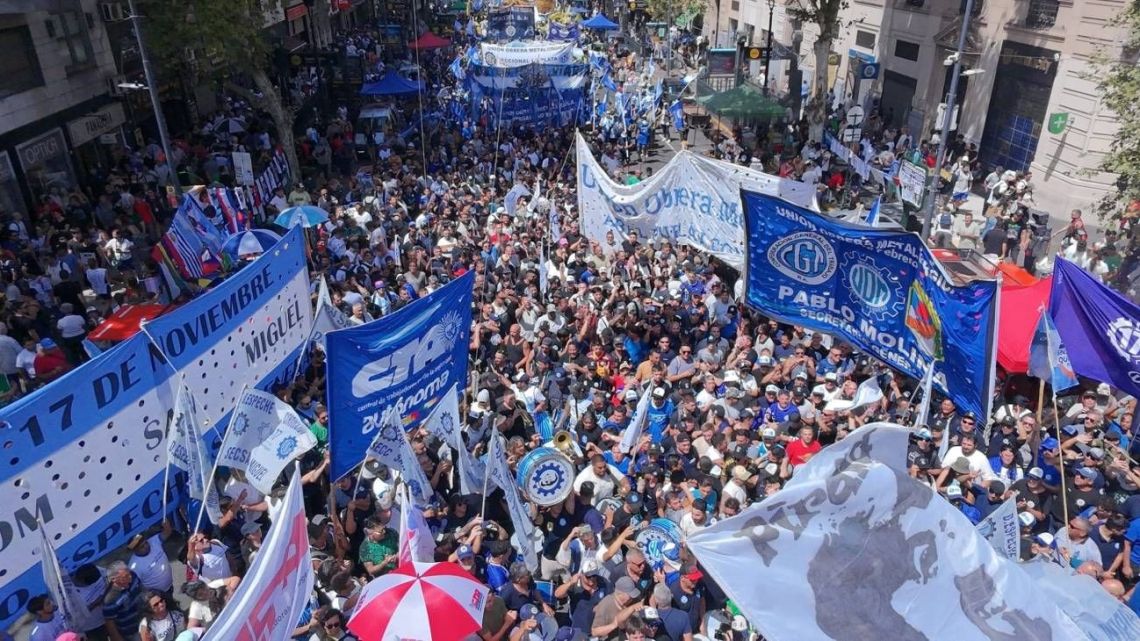
Union workers hurled stones and bottle bombs Wednesday at police who responded with tear gas and rubber bullets as a protest against proposed labour reforms that turned briefly violent.
As lawmakers debated plans unions claim will make jobs more precarious, demonstrators gathered outside Congress to make their opposition known.
A few dozen, many hooded and masked, clashed with police blocking access to the National Congress building in a show of anger that was soon put down.
Reporters and photographers witnessed injuries to one police officer and one protester, though an official toll has yet to be made public. Media at the scene estimated that at least 20 people were arrested.

The reform, a pet project of budget-slashing President Javier Milei, envisions a major deregulation of the labour market.
The measures would make it easier to hire and fire workers, reduce severance pay, limit the right to strike, and restrict holiday rights, says the CGT, Argentina's largest union federation.
There are disagreements among the unions. The most combative groups, such as the powerful Aceiteros union, considered the CGT's reaction lukewarm and are calling for a major strike.

Milei insists that existing labour laws are too restrictive and discourage formal hiring. He wants the reforms adopted by March.
Almost 40 percent of workers in Argentina lack formal employment contracts.
'Exploitative'
The government has negotiated some 30-odd amendments to its original bill to ensure its passasge. The aim is to get the reform passed into law before March 1, when Milei will open regular sessions of Congress.
"Today it is being approved, it is the possible law, which will leave employers satisfied and workers quite satisfied. The last-minute changes made in negotiations until midnight will be revealed in the debate," said Santa Fe Senator Carolina Losada, an ally of the government.
If approved by the Senate, the reform will next head to the lower house Chamber of Deputies for approval.
"Today we are here to decide whether we remain trapped in a statist, corporate, and patronage-based system that has driven away investment, destroyed jobs, and impoverished millions of Argentines," ruling party Senator Joaquín Benegas Lynch said during Wednesday's debate.
But for protester Federico Pereira, a 35-year-old sociologist, "with this exploitative labour reform, they are only thinking about the wealthy. Those who benefit are the bosses."
"Labour reform doesn't mean creating jobs, but rather making jobs more precarious," said demonstrator Ernesto Pasarin, his eyes watering from tear gas.
Since taking office in December 2023 with a plan to revitalise Argentina's struggling economy, Milei has dramatically reduced government spending and spurred deregulation.
Opposition parties and unions dispute that the reform will create new jobs.
They point out that the economy shows persistent signs of stagnation, marked by declining consumption and industrial activity.
Security Minister Alejandra Monteoliva vowed that those responsible for Wednesday's violence "will be identified" and punished appropriately.
"They are dozens of members of leftist groups who acted in an organised manner, with premeditated violence and improvised weapons to... sow chaos. They will pay," she said on X.
– TIMES/AFP









Comments