

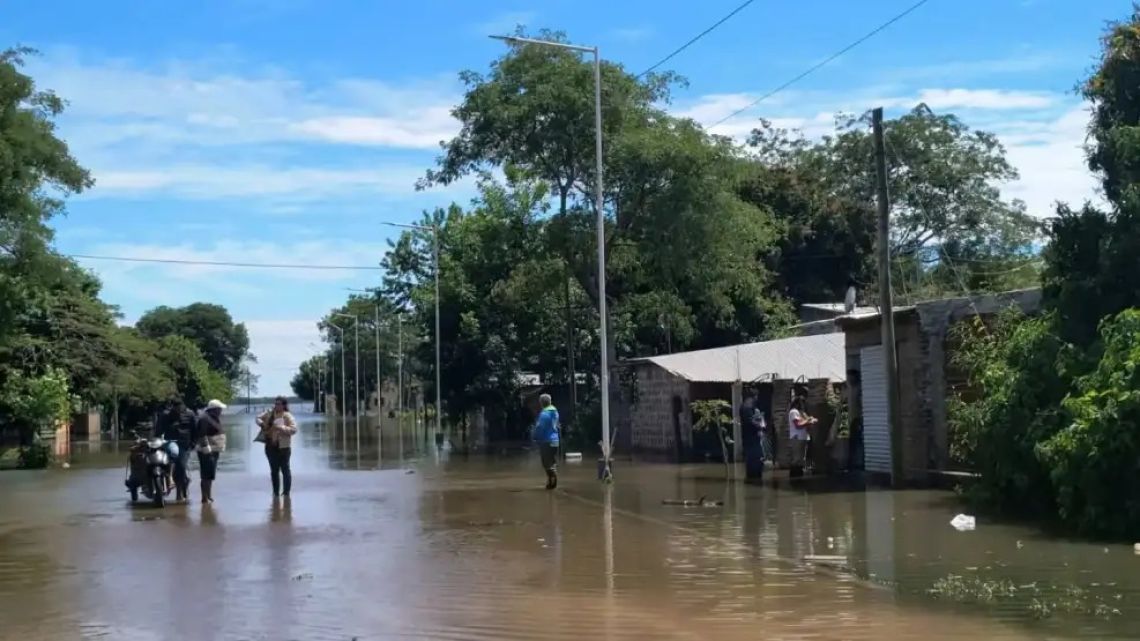
More than 2,000 people have been forced to flee their homes because of flooding linked to the El Niño climate phenomenon in the northeast of the country.
The emergency has already claimed the lives of two people last weekend and ongoing flooding could persist for months, officials confirmed.
Rainfall in recent weeks has caused dangerous rises in the Iguazú, Paraná and Uruguay rivers, which run along Argentina’s northeastern borders with Brazil, Paraguay and Uruguay before flowing into the Río de la Plata.
In Chaco Province, between 1,200 and 1,300 people have been evacuated or left their homes on their own initiative, mainly in the towns of Puerto Vilelas and Barranqueras, provincial Civil Protection deputy secretary Gustavo Santos said on Friday.

“It will be like this for a couple of months. The river will keep rising and falling constantly,” the official said.
In neighbouring Corrientes Province, more than 1,000 people have had to leave their homes, according to a Civil Defence tally released on Wednesday.
Several neighbourhoods in Paso de la Patria, a tourist town on the banks of the Paraná, were flooded after a protective embankment collapsed under pressure from rising waters. Some residents remain in their flooded homes as authorities reinforce defences and prepare emergency shelters.

People have “no other choice but to survive,” local resident Juan Pablo Gómez told AFP on Friday.
“So far, I’m holding out here in my house. From one day to the next, a metre of water came in. The barrier broke and all the water came through,” Gómez said from a boat floating beside his flooded home.
In some areas, only the rooftops of houses remain visible above the water, while at a football pitch just the crossbar of a goal can be seen.

Two rural workers drowned in Corrientes while moving livestock between islands to protect the animals from the rising waters.
Authorities in Corrientes warned on Friday that forecast rainfall in the upper Paraná and Uruguay river basins could trigger further rises next week.
In Misiones Province, storms on Thursday and Friday damaged more than 100 homes and forced the closure of roads and bridges as streams overflowed, according to local media reports.

At Iguazú Falls, the river's flow in mid-October was ten times higher than the average for that time of year.
Although several tourist circuits have reopened, access to the Devil's Throat, the falls' most famous section, has remained closed since August.
El Niño is a climate phenomenon characterised by the abnormal warming of surface waters in the equatorial Pacific Ocean, which alters wind and rainfall patterns in different parts of the world.
– TIMES/AFP


















Comments