

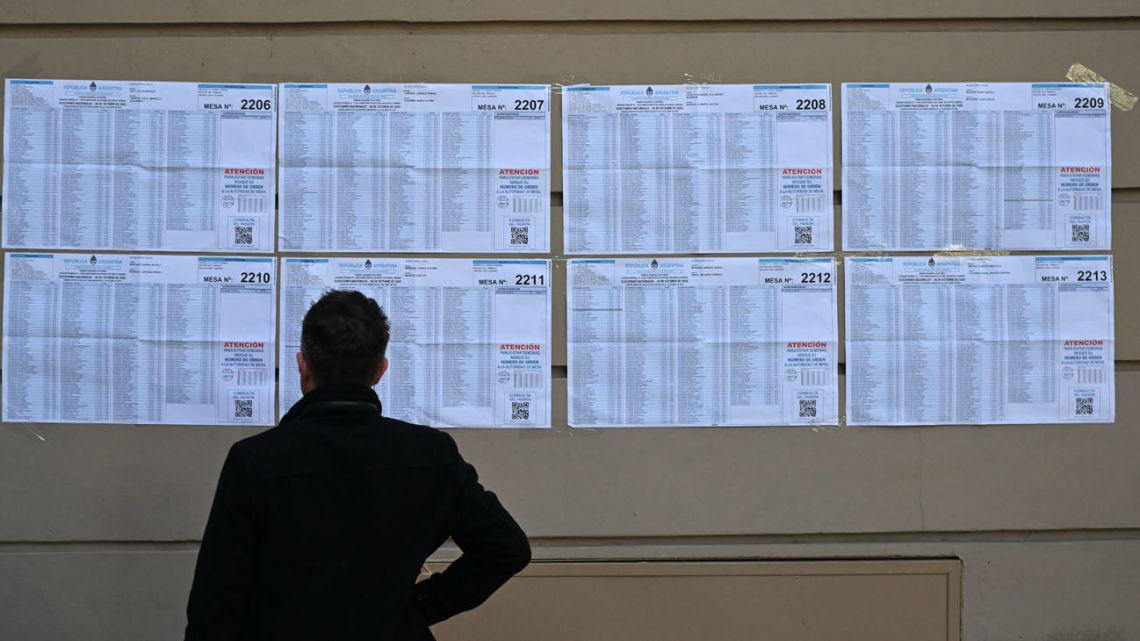
Javier Milei’s government is reigniting its push to scrap or suspend the PASO primaries, a key plank in Presidential Chief-of-Staff Karina Milei’s electoral strategy for 2027.
The debate over the future of Argentina’s Open, Simultaneous and Mandatory Primaries, or PASO, has once again taken centre stage. The government is pushing for an electoral reform that would eliminate the primaries, but the bill has not yet been sent to Congress and is already causing friction between allied and opposition governors.
Negotiations are now being led by newly installed Cabinet Chief Diego Santilli, who has been holding talks with provincial governors to gather the support needed before the bill reaches Congress.
However, opinions are far from unanimous. Catamarca Province Governor Raúl Jalil again spoke out in favour of eliminating the primaries this week; in comments to Futurock, he said the PASO “do not serve society” and described them as “a very expensive poll.” Jalil argued that the mechanism “does not strengthen political parties” and said candidacies should instead be decided through internal party primaries or internal agreements. Even so, he clarified that any such change should be approved “with the broadest possible consensus,” highlighting the changes facing the Milei administration.

On the other side is Tucumán Province Governor Osvaldo Jaldo, one of the few Peronist governors who maintains a good dialogue with the La Libertad Avanza administration. This week, he again publicly rejected the elimination of the PASO. “We have been very clear. We are against scrapping the PASO,” he said, reaffirming the position of his Independencia caucus.
Jaldo also said he still does not know the content of the Milei administration’s bill because no national official had formally presented it to him. “It’s all media speculation. Neither the Cabinet chief nor any national official has shown us a bill,” he said.
Back in April, Jaldo had warned that eliminating the PASO could become “a made-to-measure suit for La Libertad Avanza,” arguing that the primaries help order internal competition and broaden citizen participation.

Entre Ríos Province Governor Rogelio Frigerio said he would support the debate on amending, suspending or eliminating the PASO and argued that political parties should go back to choosing their candidates internally.
Frigerio also explained that the current electoral system carries a high cost for the provinces and said the public is demanding fewer elections: “According to every poll, most Argentines agree on suspending or modifying the electoral calendar, not voting so many times and not spending so many funds on it. In Entre Ríos, organising an election costs around five billion pesos [approximately US$3.36 million at the current exchange rate], and there are clearly other priorities.”
Frigerio clarified that he still does not know the definitive text of the bill, but made clear he is willing to support a reform. “Yes... I don’t really know exactly what’s being discussed, whether it’s a suspension or an elimination, but I think the PASO should at least be debated in Congress.”

He also linked the discussion to Santilli’s arrival at the head of the Cabinet, saying that “a new stage is opening up in the government,” and noted that Santilli maintains a smooth relationship with most governors.
Senate debate

Eliminating the primaries requires a special majority, and the ruling party is negotiating with allied governors, the Unión Cívica Radical (UCR), PRO and provincial caucuses over an alternative that would allow the bill to move forward.
According to government sources, the Senate will postpone debate on the electoral reform push until at least August.
The delay reflects the ruling party’s need to open a new phase of dialogue with sectors that oppose the total elimination of the primaries. The proposal has met resistance, mainly from the UCR, PRO and some provincial parties, which favour keeping the PASO with amendments, suspending them for 2027, or scrapping their mandatory nature.

The government’s main battle is in the upper house. To approve the elimination of the PASO, it needs an absolute majority of 37 votes out of the Senate’s 72 members.
La Libertad Avanza currently has 21 senators of its own, meaning it needs at least 16 additional votes to reach the required number.
Sources within the ruling party admit that the votes needed to eliminate the PASO are not currently guaranteed. According to reports, Patricia Bullrich, the head of the libertarian caucus in the Senate, has indicated that there is not yet enough support to move forward with the change.
Key points
The bill sent by the executive branch is not limited to the PASO primaries. Some of the main points are:
– ‘Ficha Limpia’ (“Clean Slate”) clause: Would bar anyone with a second-instance conviction for intentional crimes related to corruption or other serious offences from running.
– Elimination of the PASO: Parties and alliances would have to select their candidates through whatever internal mechanism they establish.
– Changes to requirements for national parties: forces would need to be recognised in at least 10 districts and meet new membership requirements.
– Changes to political financing: eliminates state funding for campaigns and raises the cap on private contributions.
– Elimination of free electoral advertising in the media.
– End of the mandatory presidential debate: eliminates the requirement, in place since 2016, to hold debates ahead of general elections.
– Changes to the Single Paper Ballot: introduces option to vote a full straight-ticket list through a specific option and allows provincial categories to be added when elections are held simultaneously.
– TIMES/PERFIL/NA










Comments