

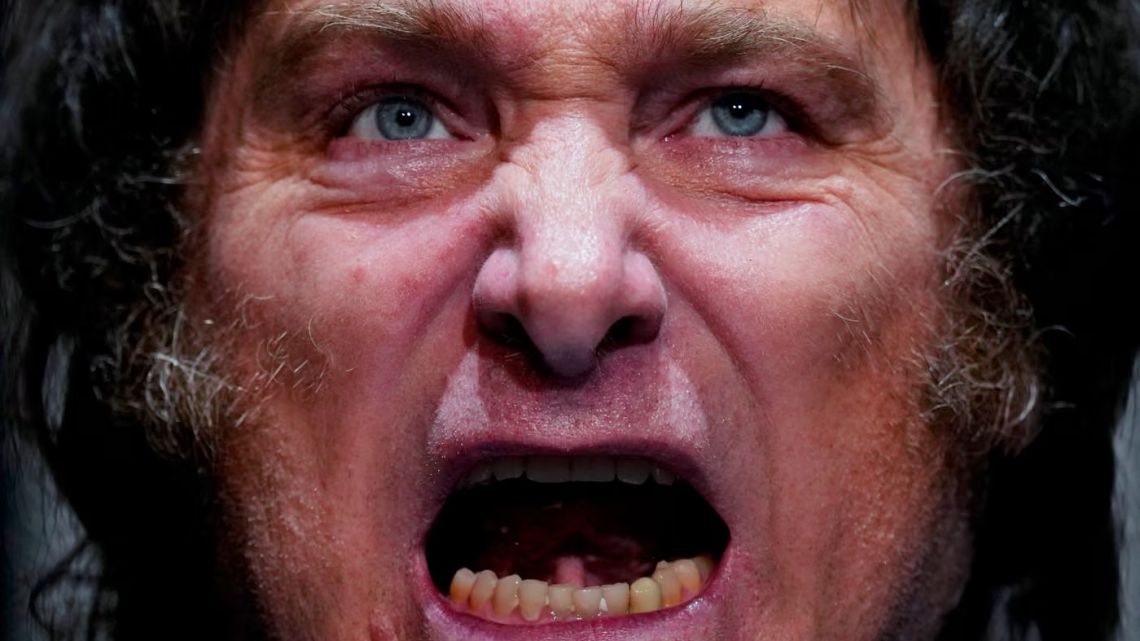
President Javier Milei's government has issued an emergency decree authorising the expulsion or denial of entry to foreigners who incite hatred against Argentina.
The Decree of Necessity and Urgency (DNU), signed by President Milei and published shortly after midnight Wednesday, states that foreigners who "incite or disseminate messages of hatred, discrimination and/or violence against the Argentine people" or who "insult national symbols" may be barred from entering or removed from the country.
The measure was announced by the Office of the President of the Argentine Republic (OPRA) in response to what it described as "recent displays of hostility" towards the country.
It was co-signed by several Cabinet ministers.

"The Office of the President announces that President Javier G. Milei has signed a Decree of Necessity and Urgency establishing as grounds for denying entry to or expelling from the national territory any foreigner who directs or incites messages of hatred, discrimination and/or violence against the Argentine people or its citizens on the basis of their nationality, as well as anyone who insults national symbols," the decree states.
"In the face of recent expressions of hostility towards the Argentine Republic and Argentines, the National Government reaffirms that the defence of the nation, its citizens and its symbols is non-negotiable. Anyone who attacks the Argentine Republic is not welcome in our country," it continued.
The government did not specify particular incidents in the decree, but the references appear to relate to an alleged wave of anti-Argentina abuse that intensified during the recent FIFA World Cup in the United States, Mexico and Canada, particularly on social media.

Milei's DNU introduces a new restriction into one of the world's most immigrant-friendly constitutional frameworks. Argentina's Constitution guarantees foreigners the same civil rights as citizens and explicitly encourages immigration, but the government argues the new measure is necessary to protect the country from acts of hatred and hostility directed at the nation and its people.
MIlei, a self-proclaimed libertarian who says he defends free speech, last week accused the Brazilian government, as well as Mexico and the US Democratic Party, of financing an "anti-Argentina campaign."
The La Libertad Avanza leader made the remarks – an apparent reference to criticism directed at the country and its national football team during the 2026 World Cup over their sportsmanship – in an interview last weekend.

"Who put the most money into this anti-Argentina campaign? The Brazilian government. Twenty-five percent of the funding came from the Brazilian government," Milei told Radio Mitre,.
He provided no evidence for his claim.
Milei said that the campaign had also been "funded by Mexico, by the Democratic Party in the United States."

"Who are they? They are the progressive leaders who don't want the ideas of freedom to succeed," he added.
Without offering further evidence to support his allegations, the President said the alleged attacks were taking place because "if the economy prospers and people are better off, they have a huge problem."
– TIMES/AFP/NA












Comments