

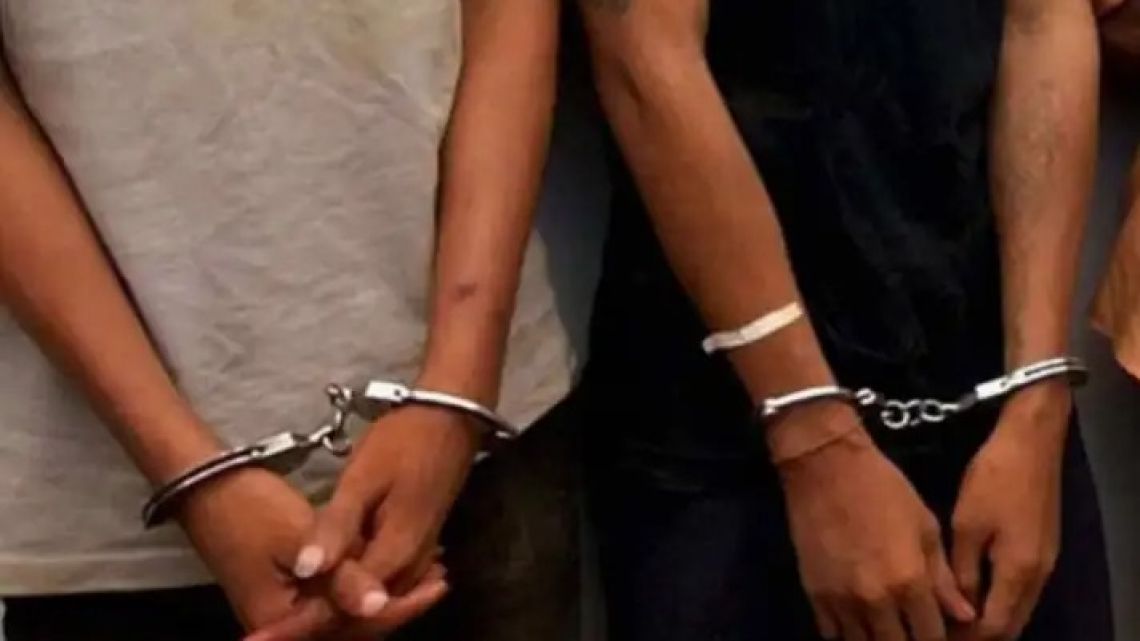
Catholic Church leaders have issued a statement expressing disapproval of a push by Argentina’s government to lower the age of criminal responsibility, warning that experts are not being heard and criticising the ideological motives behind the move.
Earlier this week, officials in President Javier Milei’s government confirmed that the ruling party will include a bill to reform the juvenile penal regime in upcoming extraordinary sessions of Congress.
The move was implemented via Decree 53/2026 published in the Official Gazette on Tuesday. The text orders “the agenda to be debated by the Honourable Congress of the Nation during the period of Extraordinary Sessions summoned as from February 2, 2026, to include consideration of the bills linked to the Juvenile Penal Code.”
In response, Church leaders issued a communiqué that recirculated a statement prepared by its Pastoral Social work team last March. In it, religious leaders call on the government to “take on board profound changes” that have affected Argentina and its residents.

It is “ideology to believe that the solution to crime is to lower the age of criminal responsibility without considering the causes” of crime, it reads.
The Executive Branch’s bill wishes to change the present régime, which has in force since the 1976-1983 military dictatorship, in order to lower the age of criminal responsibility (currently 16) to permit minors to be tried and convicted for serious crimes.
Church leaders, however, called on Milei’s government to take a wider view of criminality and the challenges facing Argentina today, among them crime and juvenile delinquency. They stressed that most crimes are not committed by youths.

“For many years Argentine society has been suffering the consequences of political administrations which have not been capable of creating a culture of work including all inhabitants and permitting all the families in this country to live in dignity while obtaining the necessary goods for an authentic human, working, social, economic and psycho-active development,” read the Church statement, which took pains to express its solidarity with those who have fallen victim to violence.
“These painful situations reinforce proposals with their focus on minors as if they were the only ones and numerically most responsible for the crimes. What we do know, through official statistics, is that most crimes are not committed by the youngest,” it continued.
“According to the official statistics of the Sistema Nacional de Información Criminal – Sistema Alerta Temprana [SNIC_SAT, early alert system of the National Security Ministry] in 2023, the last year they were published, the underaged [who were or have been] indicted for crimes make up a very low percentage of the total.”

According to the Pastoral Social team, “the problem of juvenile delinquency is crisscrossed with an enormous number of factors, which make necessary the voices of specialists like psychologists, psychiatrists and teachers. These authorised opinions do not appear so frequently in the media debates.
“When these voices are heard with their more complex approaches to the problem, the proposal to lower the age of criminal responsibility does not appear the most reasonable.
“It is ideology to believe that the solution to crime is to lower the age of criminal responsibility without considering its causes,” it concluded.

“For example, today’s youngsters have very easy access to drugs. The drugs are destroying them and their consumption is one of the main causes of violence. Drugs continue penetrating our neighbourhoods easily. We rest our case on the facts. That is why it is necessary to combat drug-trafficking! But little is said about this.”
The text then raised a series of questions, underscoring the lack of details about the proposal: “If the age of criminal responsibility is lowered, where will the minors be confined? What are the appropriate premises in the provinces to house criminal youngsters? What real alternatives do we have to offer them education and social reinsertion?”
“We know the reality of penal establishments. Do we seriously believe that to be the solution? The current legal age [of criminal responsibility] is 16 and 17. We do not consider changing the age to be necessary but what would be essential is a penal system for juveniles with a humane and integral outlook open to hope.”

The Church leaders called for a broader approach to tackling criminality, calling for improved education, rehabilitation and inclusion. “What do we need, more prisons or more schools? More prison wardens or more decently paid and properly trained teachers? Any reform of the Juvenile Penal Code should focus on social reinsertion and education as its priorities,” they wrote.
“The national, provincial and municipal governments and the political leadership have a preponderant role here but also the leaders of social movements, trade unionists, neighbourhood clubs, the clergy, the business world and the citizenry in general – we all have to contribute what is necessary for broadening the opportunities for education and training by coming closer to children, adolescents and vulnerable youngsters.”
– TIMES/NA













Comments