

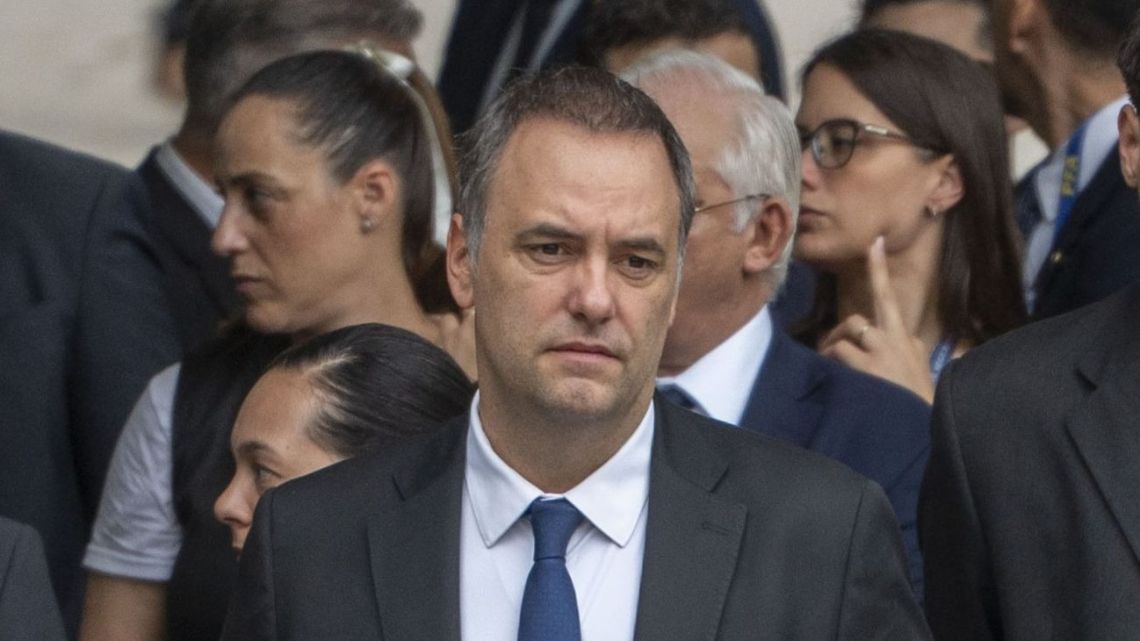
Manuel Adorni is feeling the heat – President Javier Milei’s Cabinet chief is facing mounting questions over his finances after journalistic investigations uncovered inconsistencies, unexplained asset growth and transactions involving third parties.
The official, who is reportedly considering a run for mayor in this year’s Buenos Aires City elections, is under investigation for alleged illicit enrichment. Prosecutors are closely examining unusual mortgages, private flight trips and alleged omissions in his sworn asset declarations filed as a public official.
The starting point of the case was not Adorni’s asset filings, but a series of revelations in the media. First came his wife’s trip to New York onboard the presidential aircraft, followed by images of a private jet flight to Uruguay’s swanky Punta del Este resort and then reports of properties registered in the public official and his partner’s names.
Since then, the focus has shifted to assets. According to official records, Adorni and his family acquired new properties during his time in public office without selling previous ones, implying a significant increase in wealth in recent years.
Epicentre of the controversy
At the centre of the investigation is a property deal that has raised questions about how Adorni and his family financed real-estate purchases.
Among the most significant assets identified are an apartment in the Buenos Aires City neighbourhood of Caballito and a house in a gated community in Greater Buenos Aires, the latter registered in his wife’s name. Both were purchased while Adorni was already serving in government, according to local media reports.
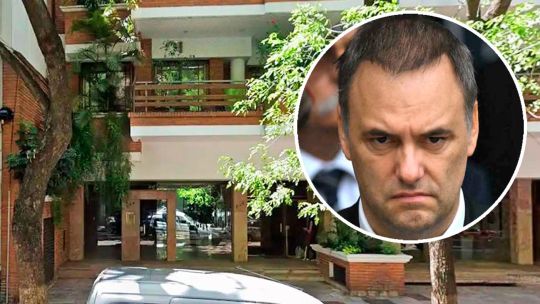
According to a report by La Nación, the focal point of the controversy is an apartment on Miró Street in Caballito. Property registry documents show the nearly 200-square-metre unit was acquired for a declared value of US$230,000.
The structure of the purchase has drawn particular scrutiny. Around 87 percent of the transaction was financed through a non-bank mortgage provided by two women – 72-year-old Beatriz Alicia Viegas and 64-year-old Claudia Bibiana Sbabo – who had themselves bought the property just six months earlier from former footballer Hugo Morales for US$200,000.
Morales, who played for Lanús, Huracán and the Argentina national team, had owned the property since 1996 and rented it out for several years before selling.
Investigators are seeking to establish whether the two women acted independently in a resale operation or as intermediaries for a third-party investor – a scenario that could point to efforts to obscure the origin of funds or avoid tax liabilities or leaving a paper trail.
Questions have also been raised about the profile of the lenders. According to reports, Sbabo appeared shortly after the purchase on the rolls of the Buenos Aires City government’s ‘Pase Cultural’ programme, aimed at pensioners with relatively low incomes, while Viegas appears in 2017 company records as a partner in Nazca Gold SRL and is listed as the owner of property in Buenos Aires.
Asset declaration
The case has also highlighted possible omissions in Adorni’s sworn asset declarations. Some of the properties identified do not appear in public filings, although people close to the official say they may be included in confidential annexes or that disclosure deadlines have not yet expired.
Federal prosecutor Gerardo Pollicita, head of Federal Criminal and Correctional Prosecutor’s Office No. 11, is investigating whether the women acted as front persons for an undisclosed investor or whether the transaction formed part of a scheme to evade taxes and conceal the true origin of the funds.
The judicial investigation extends beyond the Caballito property. A recurring name in Adorni’s asset dealings is notary Adriana Nechevenko, who was involved both in the Miró Street transaction and in the registration of a house in the Indio Cua private gated community in Exaltación de la Cruz.
The second property, registered in the name of Adorni’s wife, Bettina Julieta Angeletti, reportedly carries monthly maintenance fees of around 700,000 pesos.
As Cabinet chief, Adorni earns roughly 3.5 million pesos per month, according to local media reports, although gross salary figures for the position are closer to six million pesos before taxes and deductions.
Official records of entries to the Casa Rosada show that Nechevenko visited government house seven times between July 2024 and September 2025.
Prosecutor Pollicita has summoned the notary to testify as investigators seek to clarify the origin of the funds used in the property transactions and the nature of her professional relationship with Adorni and Angeletti.
Private flights to Punta del Este
Investigators are also examining two private flights to Punta del Este that were billed to journalist Marcelo Grandio and his company, Imhouse, in a case that has drawn judicial scrutiny over who ultimately paid for the trips.
When questioned about the trip, Adorni initially said he paid “his share” of the flights, but investigators have found no bank transfers or payment records to support that claim, according to court documents cited in local media reports.
The probe gained momentum after testimony from Vanesa Tossi, an employee of aviation broker Jag Aviation, who told investigators she was pressured by Grandio to cancel invoices and issue credit notes. She also said the flights were paid for in cash.
Federal Judge Ariel Lijo, who is overseeing the case, has issued a restraining order preventing Grandio from contacting the witness while the court determines whether the flights constituted gifts to a public official or were part of an undeclared expenses scheme.
“The base price for the return flight was US$4,800, but Grandio asked to use empty seats on the plane – the so-called ‘empty leg’ – to reduce the cost to US$3,000,” broker Agustín Issin told the court, according to local media.
International travel
The investigation has also examined discrepancies in Adorni’s international travel record. Argentina’s National Migration Directorate has provided travel records that contradict public statements made by the Cabinet chief about his trips abroad, according to court filings and local media reports.
While the official said his only leisure trip in the past year and a half was a visit to Uruguay, migration records show travel to Peru and Ecuador, with investigators suspecting the final destination may have been the Caribbean island of Aruba.
Investigators believe the undisclosed trips could indicate a level of spending higher than that reflected in the official’s declared income, a key element in the illicit enrichment investigation.
Adorni has generally declined to provide further details in public statements, saying his wealth was built over many years in the private sector and that he cannot discuss specifics due to the ongoing judicial investigation.
The Cabinet Chief’s Office has not publicly responded to the latest revelations as investigators continue analysing financial records, transfers and witness testimony.
– TIMES/PERFIL/NA












Comments