


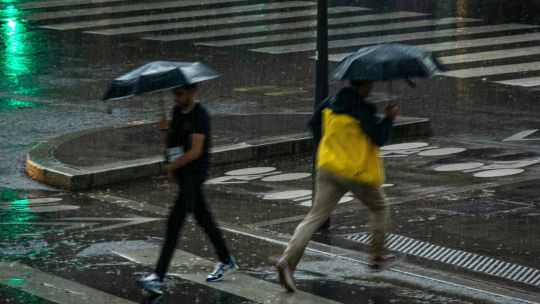
The obsessive economist Javier Milei is being betrayed by his own passion. Two consecutive quarters of negative growth place the economy technically in recession and after international forecasts only a few months ago were still predicting a growth rate of 3.5 percent, it is becoming a toss-up whether the economy will grow at all despite the twin surpluses (with the balance of trade perhaps ending the year closer to US$30 billion than US$20 billion in the black). After the dollar was pegged around 1,500 pesos for the last five months, it has already moved well past 1,600 pesos but the really alarming figure is country risk – around 400 points in midyear, it shot past 1,100 points this week.
The blame for the latter figure cannot be entirely pinned on Milei – the Artificial Intelligence boom worldwide is starting to look more like a bubble with doubts rising as to the sustainability of the astronomic level of capital and inputs involved, while the expectation of higher interest rates in response to inflation in the United States is generating the “flight to quality” – but much of the explanation remains political. Bondholders cannot see Milei gaining re-election next year with an economy faltering this badly, anticipating that his market-friendly presidency will be replaced by an administration which will be much worse news for creditors. By pulling the plug on Milei, they thus make far more probable that the outcome they so dread will in fact transpire, but the thought processes of the markets do not seem to work that way.
Since the economist Milei cannot play to what he imagined to be his strengths, he has little choice but to turn to the despised politics in a bid to load the dice in his favour for next year’s elections. Here the great obsession is to eliminate the PASO primaries before the parliamentary year closes, even if passage of the 2027 Budget should be the priority in principle. Negotiations to ensure the former might well lead to significant changes in the latter, as deputies and senators haggle for their provinces or their hobby-horses in exchange for their votes.
Meanwhile, with the ruling of the International Tribunal for the Law of the Sea in Hamburg over unauthorised Malvinas oil exploration expected for today, Milei’s Defence of Sovereignty bill is languishing in Congress. A rush of blood after the World Cup semi-final victory over England in July, it is already fading as an electoral game-changer while only adding to the country’s problems. The bill’s creation of a National Security Council to control and approve investments, subordinating them to sovereignty, sounds much more like Kirchnerism than the brainchild of a libertarian government and would only add to the fears reflected in country risk should the government committed to state intervention anticipated by those fears come to power. The idea of limiting investment to free enterprise is aimed at blocking China (thus making this bill responsible for at least two potential Security Council vetoes against Rafael Grossi’s run for United Nations secretary-general, alongside its main target of the United Kingdom) but just to give one recent example, YPF is being partnered by the Italian state firm ENI (Ente Nazionale di Idrocarburi) in the US$50-billion Argentina LNG project approved for the RIGI incentive scheme for major investments only a week ago. Once nationalism enters the door, investment flies out the window – patriotism was Samuel Johnson’s last refuge of scoundrels, covering a multitude of sins.

If this initiative born out of World Cup euphoria seems to indicate that football offers no guarantees of political success, perhaps the government can move in the opposite direction and resume its crackdown against AFA Argentine Football Association corruption interrupted in March by the change of Justice minister. The Supreme Court has just dropped a hint in that direction by moving the money-laundering case against AFA back from the friendly court to which Justice Minister Juan Bautista Mahiques had steered it to the original magistrate, the far more impartial federal judge Daniel Rafecas. Since the contacts of AFA President Claudio ‘Chiqui’ Tapia and treasurer Pablo Toviggino extend across the Peronist spectrum (ranging from Buenos Aires Province Governor Axel Kicillof and 2023 presidential candidate Sergio Massa to Santiago del Estero Senator Gerardo Zamora), it would be all too easy to weaponise this crackdown politically.
But the main onus on the economist Milei remains an economy in recession during two of his three years in power.




Comments