

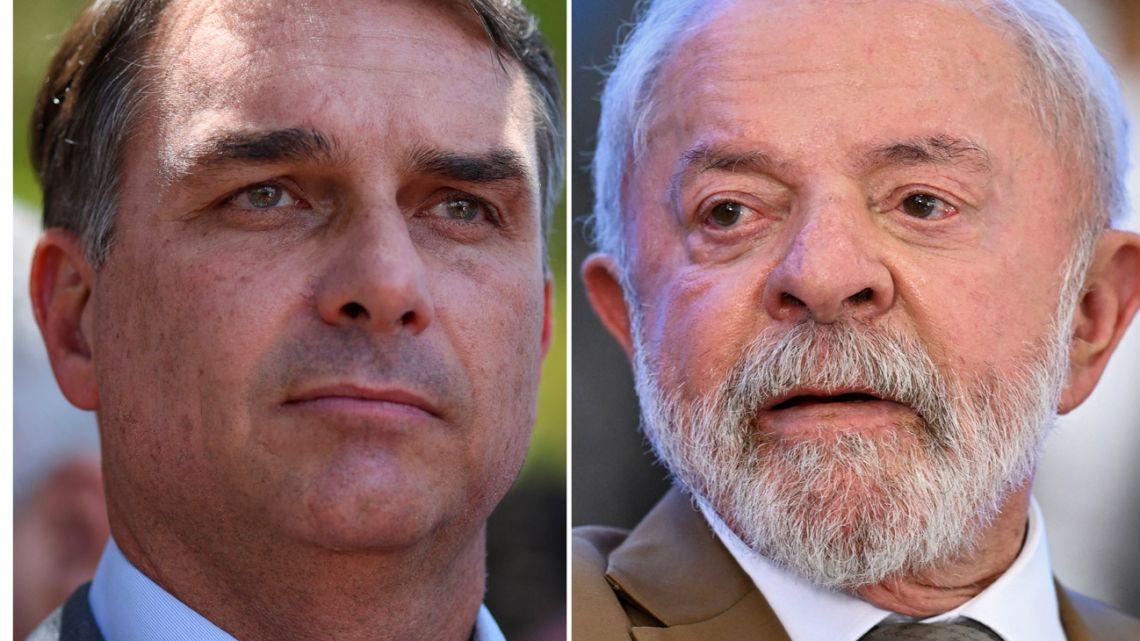
Brazil’s presidential election run-off tomorrow, this October 25, provides the politically inclined with another chance to test the accuracy of how modern polling measures capture a nation’s mood and climate.
As of Thursday, with three days to go until the crunch second round showdown between leftist incumbent Luiz Inácio Lula da Silva and right-winger Flávio Bolsonaro, nearly all major public opinion polls showed a technical tie, with a thin margin of difference between the two hopefuls. The difference in the majority of surveys were all within the margin of error, leaving it too close to call.
Opinion polls for the first round are now generally seen to have been slightly off the pace. Lula went into the election tipped to finish in first by most pollsters, albeit only by a thin margin. But instead, Bolsonaro outperformed expectations to emerge with 47.03 percent of valid votes (56,104,503 ballots) to Lula’s 45.15 percent (53,879,538 ballots).
That difference set the ground for the next stage of the campaign, with the two candidates now focused on winning the support of the more than 33 million citizens who did not vote – a record abstention figure representing 21.08 percent of Brazil’s electorate.

After underestimating Bolsonaro’s support in the first round, pollsters in Brazil have since tweaked their models to account for the smaller slate of candidates (just the Liberal Party leader versus the Workers’ Party president) and high volatility. The performance of either candidate (for good or for bad) in the final debate, scheduled foryesterday evening, could also move the dial.
The latest poll by the PoderData institute, published Thursday morning, showed a statistical tie in the race, with Bolsonaro on 49 percent of voter intentions against 48 percent for Lula. The survey was based on telephone interviews with 4,000 voters across 865 municipalities nationwide and a margin of error of 1.6 percentage points, putting it within the margin or error. When projected blank and spoiled ballots were excluded to calculate only valid votes, the right-winger led 51 percent to 49 percent, in line with the pollster’s previous findings.
The Quaest consultancy firm, whose polling is commissioned and used by TV Globo, released results on Wednesday projecting a similarly tight contest. The survey, based on face-to-face interviews with 2,154 people across 124 municipalities, gave Flávio 45 percent and Lula 44 percent, within the poll’s margin of error. Nine percent said they would cast blank or spoiled ballots and two percent were still undecided. Counting just valid votes, Bolsonaro led with 50.56 percent to Lula’s 49.44 percent, a margin of just 1.12 percentage points.

The results of both firms echoed the findings produced by Atlas Intel, the polling company used by Bloomberg. Based on a sample of almost 5,000 respondents, its survey gave Bolsonaro 49.8 percent of total voting intentions, compared with 47.6 percent for Lula. With valid votes, he led 51.1 percent to 48.9 percent – just a slight edge on a technical tie.
Two other surveys, taken at the start of the week, produced similarly tight results. Real Time Big Data, consulting 1,500 people, gave Bolsonaro 48 percent and Lula 45 percent. Valid votes were projected at 52 percent for the right-winger and 48 percent for the incumbent – just outside the poll’s three-percent margin of error. BTG/Nexus, who consulted 3,000 people in a three-day survey, projected 46.5 percent of Bolsonaro and 45.9 percent for Lula, well inside the margin of error. It projected that valid votes would break in favour of the challenger, with Flávio winning the run-off 50.3 percent to 49.7 percent.











Comments