

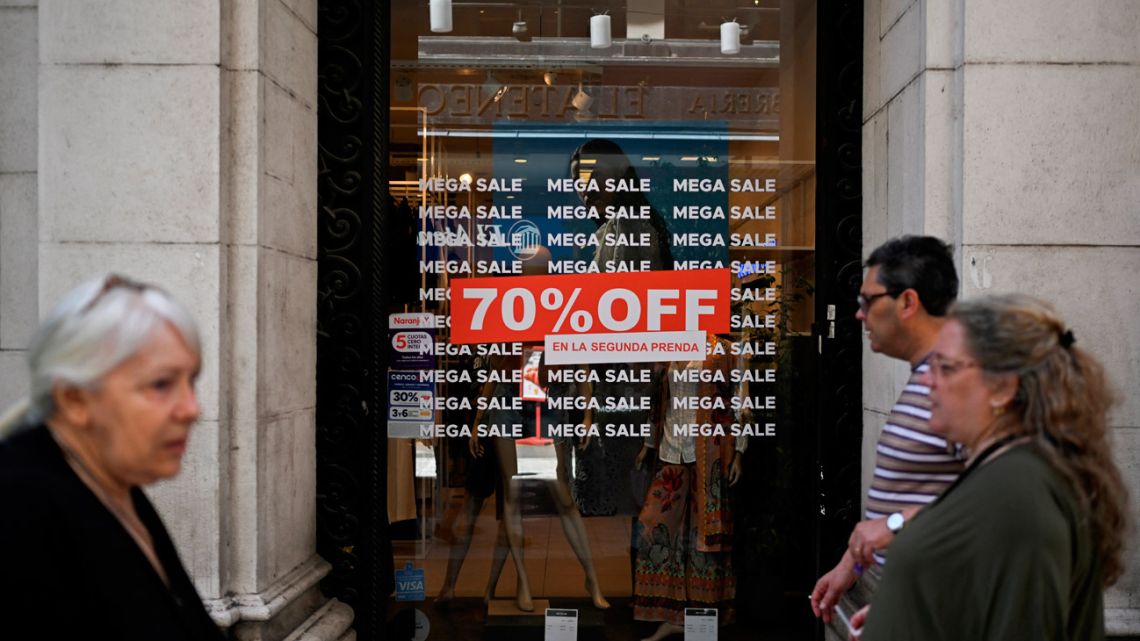
Argentina's economy is expected to lose momentum this year, the Organisation for Economic Cooperation and Development (OECD) forecast this week, as it cut the country’s growth forecast to 2.6 percent.
The Paris-based organisation had previously forecast 2.8 percent growth. Argentina’s economy expanded 4.5 percent in 2025.
The OECD also lowered its forecast for Argentina's growth in 2027 to three percent, from 3.5 percent previously. It still expects inflation to continue slowing though, revising its 2026 forecast down to 30.8 percent from 31.1 percent previously.
The revised outlook came as the OECD slightly raised its forecast for global economic growth in 2026 in its latest report, saying the world economy has remained "resilient" despite the impact of the war in the Middle East.
Weaker growth in LatAm
Argentina's downgrade formed part of a mixed outlook for Latin America, although the region's two largest economies are expected to fare better.
Mexico received the biggest upward revision, with growth now forecast at 1.5 percent in 2026, up 0.7 percentage points from the OECD's previous estimate, followed by 1.8 percent growth in 2027.
Brazil is expected to expand two percent this year, an upward revision of 0.4 percentage points, before slowing to 1.9 percent in 2027, down 0.2 points from the previous forecast.
The OECD warned, however, that the region faces significant risks from extreme weather and rising food prices.
"Other significant downside risks include potential weather-related supply shocks, including a very strong El Nino, that adversely impact agricultural production and add to rising food price pressures," it said.
The OECD puts the probability of an El Niño event developing between October and December 2026 at 95 percent. AFP reported that it could be the strongest such episode on record, with effects potentially extending into 2027.
Persistent disruptions to fertiliser supplies from the Gulf could further amplify pressure on food prices and reduce "agricultural production in the most exposed economies of Latin America, Africa and the Asia-Pacific region,” said the OECD.
That’s significant for Argentina, given the importance of agriculture to exports and foreign-exchange earnings to the economy.
Global economy remains resilient
Global economic growth is now seen at 2.9 percent in 2026, a 0.1-point increase from the OECD's June forecast of 2.8 percent. Growth is then expected to reach three percent in 2027.
The OECD said the global economy had "resisted better than expected" the energy-supply crisis caused by the conflict in the Middle East, although persistent inflationary pressures and uncertainty were weighing on the short-term outlook.
Even though energy prices have soared since the United States and Israel launched strikes against Iran in late February, the OECD noted that "broader financial conditions remain supportive."
"Sizeable oil inventories, additional supply from outside the Gulf economies and discretionary government support measures all helped to cushion the impact on the global economy," said the OECD report.
It also cited the partial use of substitute commodities such as coal and withdrawals from oil reserves as factors helping to offset the impact of the conflict.
A major source of resilience has been massive investment in artificial intelligence, which has boosted production and trade and could result in "stronger growth than projected."
Energy and inflation risks
Experts warned that the global outlook remains particularly uncertain as the Middle East conflict continues to affect oil and gas supplies, including through disruptions to shipping via the Strait of Hormuz.
OECD Secretary-General Mathias Cormann said the persistence of the conflict, high energy prices and increased global uncertainty continued to cloud the outlook for 2027.
The impact is not limited to oil. The OECD also warned of higher natural gas prices and increased competition between Europe and Asia for liquefied natural gas cargoes as European countries seek to rebuild their reserves ahead of winter.
The OECD expects inflation across the G20 to reach 4.1 percent in 2026, higher than previously forecast, before slowing to 3.6 percent in 2027.
It said central banks should "remain vigilant and ensure that inflation expectations are well anchored," while governments need to make greater efforts to ensure public-finance sustainability.
Argentina's inflation outlook
For Argentina, the OECD expects the disinflation process to continue, with inflation projected at 30.8 percent in 2026, down from its previous forecast of 31.1 percent.
"Further disinflation is expected in Argentina," the report forecast, while warning that higher energy and fertiliser costs could present obstacles.
The OECD expects inflation to fall further next year to 20.5 percent, coupled with three percent economic growth.
The projections are more cautious than those made by President Javier Milei’s government in its 2027 Budget proposal, which forecasts four percent GDP growth next year and inflation of 18 percent.
For the United States, the OECD expects GDP to expand 2.2 percent this year, up 0.2 points from its June forecast, and 2.1 percent in 2027.
China, meanwhile, is expected to continue slowing, with growth forecast at 4.5 percent this year and 4.2 percent next year.
For the eurozone, the organisation expects growth of one percent in both 2026 and 2027, supported by greater energy stability and new government spending programmes, including on defence.
– TIMES/AFP/NA














Comments