

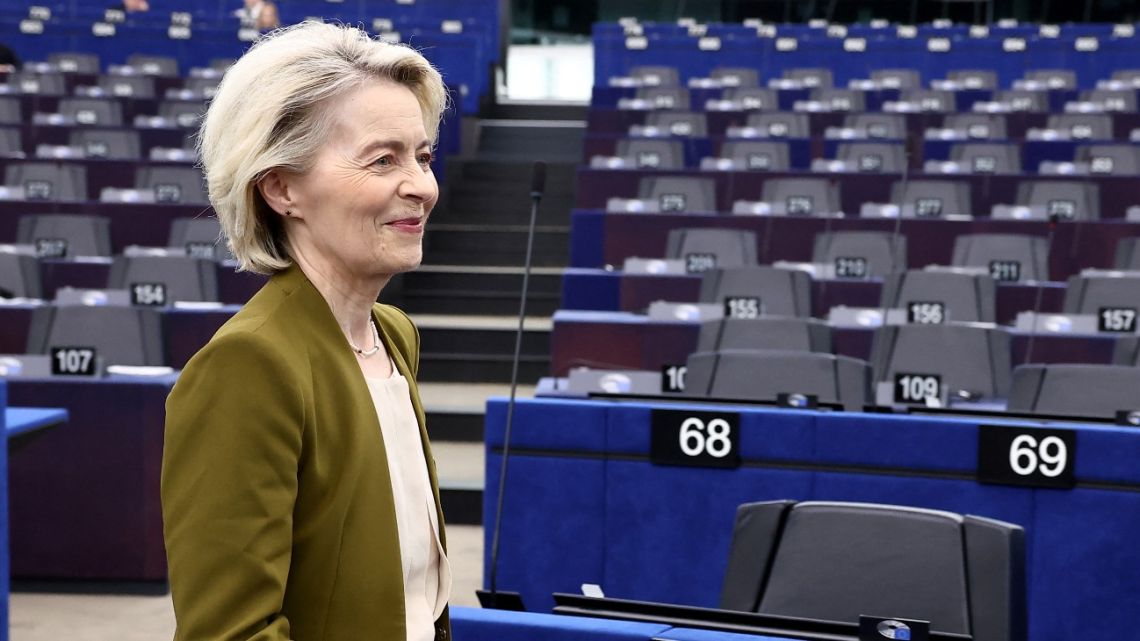
The European Parliament approved measures to protect European farmers under a potential trade deal with South American countries grouped under Mercosur, a key technical step needed to finalise the landmark pact.
Lawmakers greenlit the so-called safeguards during a vote on Tuesday. The measures will shield local agrifood companies from sudden swings in imports or prices – a step meant to address concerns that France, Italy and others raised about the trade agreement, the EU’s largest ever.
EU lawmakers and member states are rushing to finalise the deal with the Mercosur bloc – Argentina, Brazil, Uruguay and Paraguay – before a potential signing ceremony on Saturday. Failing to conclude the deal now could derail the entire effort after 25 years of negotiations, representing a blow to the bloc’s credibility with its partners, EU officials and diplomats have warned.
“If there’s no signature on December 20, then the agreement is dead, and this will have consequences for the EU in future trade relations with countries around the world,” said Bernd Lange, chair of the Parliament’s trade committee.

France has said it’s not ready to approve the deal, calling for a delay until at least early next year. Italy, whose support is crucial, has yet to signal a final stance but previously said a deal with sufficient agriculture protections could work.
Gabriel Mato, the lead EU lawmaker on the Mercosur deal, said Parliament had introduced criteria to help the bloc better detect and respond to any serious market disturbances caused by the trade pact.
Now that Parliament has finalised its Mercosur safeguards, it will work to harmonise them with those that member states recently approved, starting at a meeting on Wednesday. If that happens, governments could then give the go-ahead to European Commission president Ursula von der Leyen to sign the deal this weekend in Brazil.

But there is not currently enough support among countries to get the deal approved, said a German official, speaking anonymously to discuss the sensitive talks.
EU leaders are arriving on Wednesday for their regular end-of-year summit in Brussels, where the topic is expected to be discussed. Thousands of farmers will also descend on Brussels to protest the deal.
The Mercosur accord is an attempt to create an integrated market of 780 million consumers, providing a boost to the EU’s embattled manufacturing sector and giving Europe easier access to Mercosur’s vast agricultural industry. The deal would also help both regions diversify away from the United States after US President Donald Trump imposed worldwide tariffs.

If the agreement collapses, the economic loss would hit Mercosur countries harder, given the deal’s potential gains are larger for the South American bloc, said Antonio Barroso and Jimena Zuniga in a report for Bloomberg Economics.
But failure would be a deep geopolitical blow for the EU, they added, hindering a push to open new markets and counter US tariffs. The continent would also lose a key tool to advance its interests in the region as China moves in.
by Jorge Valero & Max Ramsay, Bloomberg









Comments