

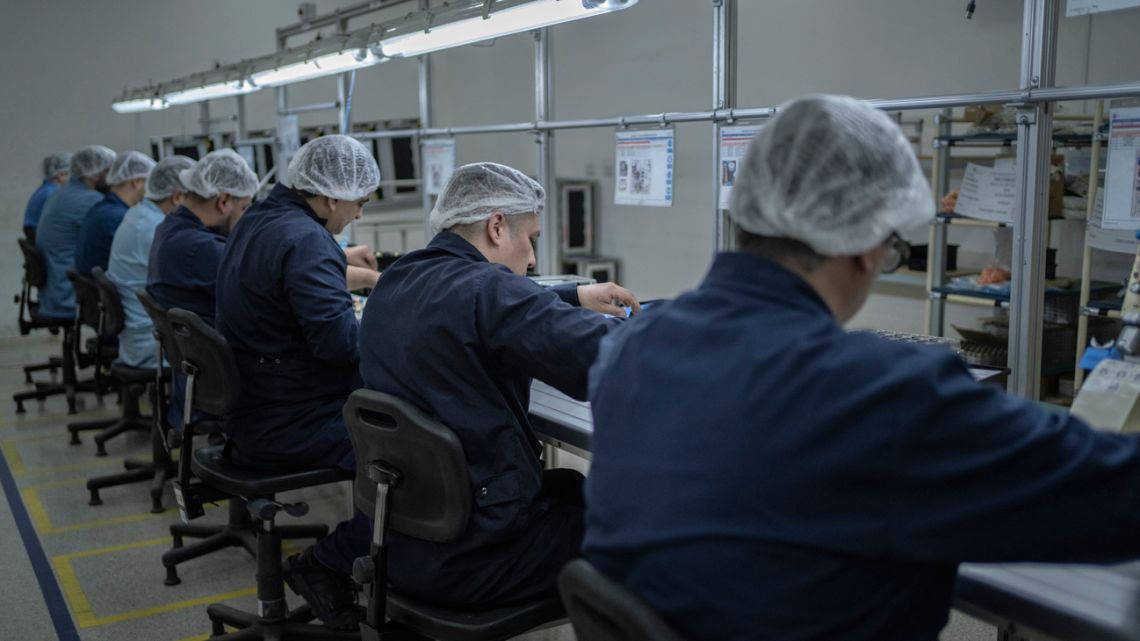
Argentina’s economy contracted for a second consecutive month in November on the heels of a crunch midterm election that had precipitated a sharp market sell-off.
Economic activity fell 0.3 percent from October, the INDEC national statistics bureau said Wednesday, after a 0.4 percent decline in October. Economic activity also shrank 0.3 percent compared with the same month of the previous year, far below the median estimate of two-percent growth from economists surveyed by Bloomberg.
Fishing, manufacturing and retail led the year-on-year decline, while agriculture, mining, finance posted annual growth.
President Javier Milei’s libertarian party recovered from a devastating setback in September’s Buenos Aires Province balloting to score a landslide victory in the midterms. Argentine assets plunged in the seven weeks leading up to the October 26 ballot as traders bet voters would again hand Milei a crushing loss. A key element to the turnaround was a financial lifeline from the US, which stepped in to shore up the peso with a currency swap that Argentina paid down earlier this month.

“Along with recent inflation data, the activity prints suggest stagflation risks are clouding what we have expected to be a bright 2026. That’s bad news, but not catastrophic. Somewhat slower activity and faster price gains are unlikely, on their own, to derail the country’s path toward a stable macro and more sustainable growth. But the more important risk is that they could erode public confidence in the government and raise doubt over the political sustainability of Milei’s programme," said Jimena Zuniga, Argentina economist for Bloomberg Economics.
Data posted last week suggests that the pre-vote volatility continued to drag on South America’s second-biggest economy the following month. Argentina’s construction sector posted its largest monthly decline of last year in November, while the country’s manufacturing industry also saw activity slow. Those and other sectors sped up in September and October to get ahead of a possible devaluation after the vote, leaving November dry.
“This was in line with what we expected, November was a bad month in terms of activity,” Federico González Rouco, senior economist at Empiria consulting group in Buenos Aires, said. “But I also think this is more long-term. The economy was stagnant all year. If 2025 ends up showing growth, it will have been due to carryover effects, and that’s becoming clear.”

Argentina’s economy posted month-on-month contractions in five of the last 11 months, and no growth in two others.
Monthly inflation accelerated more than expected in December to 2.8 percent, led by beef, bus fares and electric bills. Inflation is expected to cool to 20.1 percent in 2026, while the economy is set to grow 3.5 percent, according to economists surveyed by the Central Bank.
by Manuela Tobias, Bloomberg











Comments