

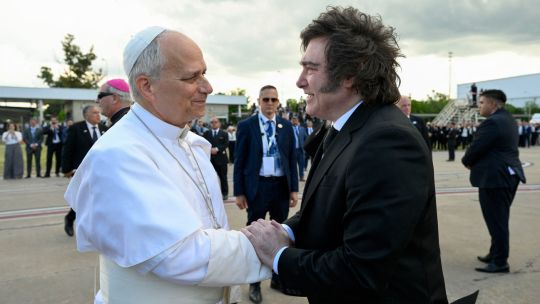
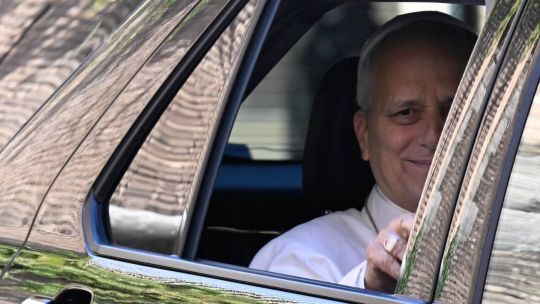
The Casa Rosada has declared Pope Leo XIV’s visit over, giving it a positive assessment while steering clear of any controversy. Officials maintain that the pontiff’s message was in line with their expectations.
President Javier Milei has avoided any political interpretation of the Pope’s speeches, while Vice-President Victoria Villarruel interpreted Leo’s words as a call for national unity.
Nevertheless, over the course of four days, the Pope delivered a series of pointed messages that directly challenge the Milei government’s agenda, even though Leo never mentioned the president by name.
The economy and importance of words
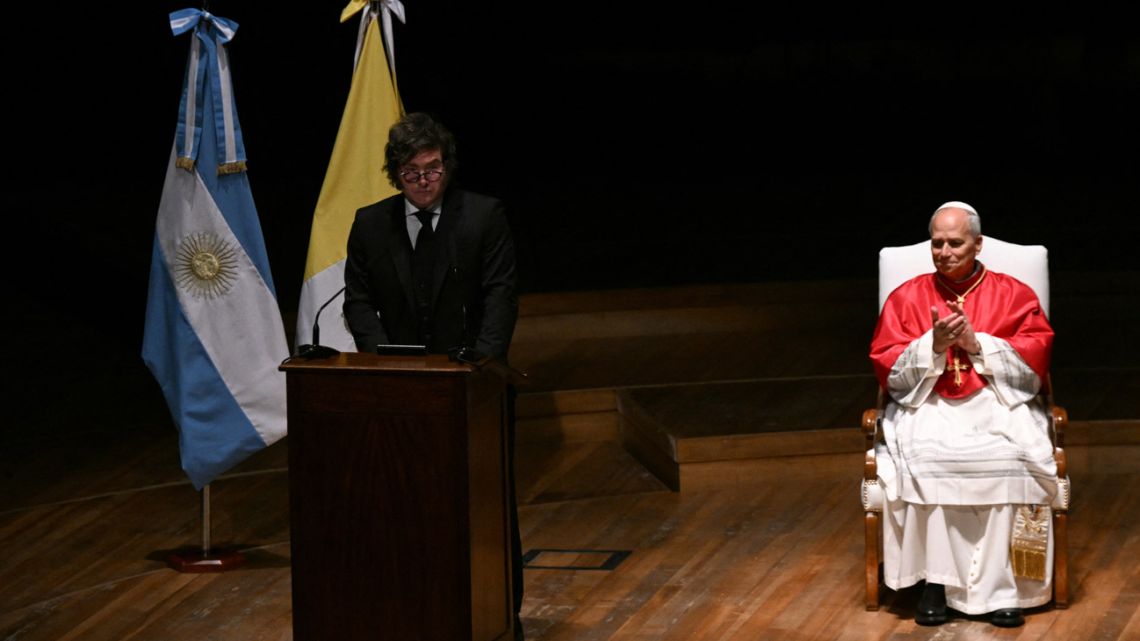
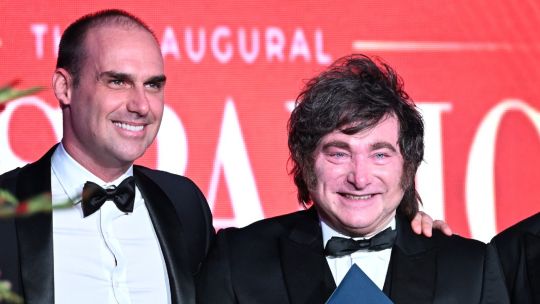
The first message came on Sunday at the Palacio Libertad, with Milei seated beside him and much of Argentina's political spectrum represented in the audience.
“The economy must serve the person, not the person the economy,” Leo XIV declared. The remark resonated around the world, with many interpreting it as a criticism of the government’s austerity policies.
In the same passage, however, the Pope also called for support for initiatives that “open up opportunities, stimulate private enterprise” and allow economic growth to reach those most in need.
More uncomfortable for the government was the pontiff’s reference to people who, “even when working, struggle to meet their household needs,” alongside a mention of the elderly. Just days earlier, Milei had denied that people were running out of money before the 20th of each month, calling critics who spread that idea idiots.
Another of Leo XIV’s messages to Milei, and one of the most politically resonant passages of the visit, concerned democratic coexistence. The Pope said democracy was strengthened through “care in the use of words” and urged people to recognise those who think differently as “fellow citizens with whom we share the same destiny.”
He delivered the remarks in front of a president who has made insulting political opponents and journalists a hallmark of his style. According to a review by the La Nación newspaper, the Pope had not raised this issue in any of the other nine countries he had visited as head of state.
In the same speech, he argued that those in government must “recognise the limits of the power entrusted to them.”
The funding of state universities and care for the disabled, two of the most persistent areas of conflict for the Milei administration, also featured in what were unmistakably pointed messages. At the Palacio Libertad, the Pope called for particular efforts to strengthen “education, vocational training, universities and research.”
The following day, at the Pequeño Cottolengo Don Orione care centre in Claypole, he was even more explicit on the subject of people with disabilities: “Their lives are not a burden on society; they are a blessing.”
The remark came after months of dispute between the government and Congress over funding for the sector.
Within the corridors of the Casa Rosada, officials chose a different interpretation of one of the most widely quoted passages of the visit.
“A nation must seriously ask itself where it has gone wrong when its young people have to leave their homeland to fulfil their dreams,” the Pope said.
It was the passage from Leo XIV’s Palacio Libertad speech that Milei applauded most enthusiastically, even raising his eyebrows in an unmistakable sign of approval.
The role of the state and world of work
The second point of friction came during a meeting with representatives of the world of labour at the Catholic University of Argentina (UCA), an event attended by business leaders, representatives from the CGT umbrella union grouping and social organisations.
Leo XIV argued that depriving someone of their job “is a grave wound to their dignity.” He called for a state that retains its “regulatory power for the common good,” at a time when the government is pursuing an aggressive deregulation agenda.
He also recalled that the right to private property is “always subject to a social mortgage” and invoked Pope Francis’s three “Ts”: tierra, techo y trabajo (land, housing and work).
The words of the head of the Catholic Church drew enthusiastic applause from part of the audience, which saw the agenda of social movements vindicated.
The pontiff also warned that unregulated automation could put many jobs at risk. His remarks clashed with the government’s approach and policies, which encourage businesses and workers alike to adapt to changes driven by deregulation and technological advances.
Amid the succession of remarks that amounted to direct messages to the government, however, the ruling party found another line in the same speech to its liking: “The state does not have to do everything.”
From social media to Luján
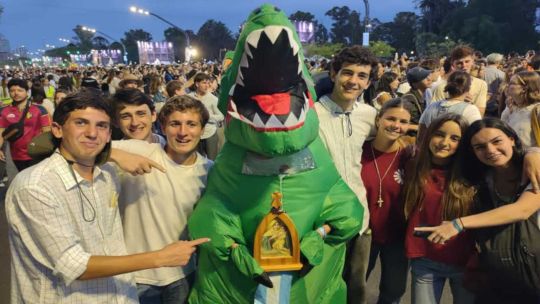
During a vigil with young Catholic faithful at the Monumento a los Españoles on Tuesday evening, the Pope addressed the use of social media in remarks that tacitly touched on the president’s own activity on digital platforms.
Leo XIV warned that, in the pursuit of approval, “we can end up lying, betraying or humiliating someone on social media.”
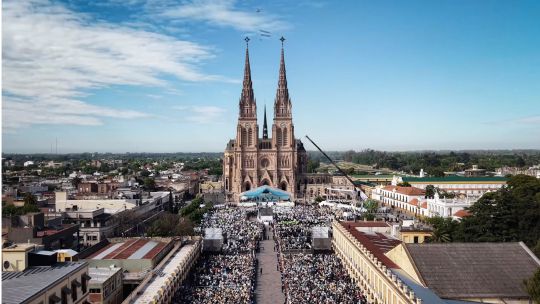
The visit ended on Wednesday in Luján, before a huge crowd. The Pope spoke of families enduring times of great suffering because of poverty and unemployment. He called for differences rooted in the past and present to be resolved in order to build a future “where love has the last word”, concluding with a message addressed to the entire country: “Argentina, rise up and walk.”
It was a message diametrically opposed to Milei’s regular pledge to “drive the final nail into Kirchnerism’s coffin.”



Comments