

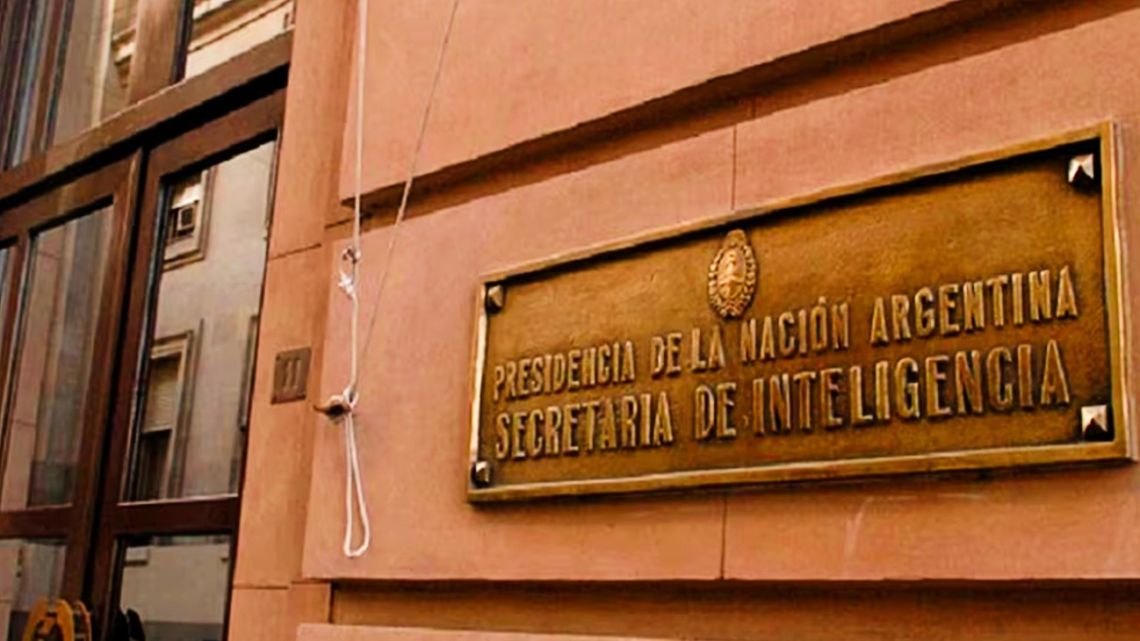
President Javier Milei has ordered a restructuring of the SIDE state intelligence services (Secretaría de Inteligencia del Estado, SIDE), redefining its remit and granting it extra powers to apprehend individuals caught in the act of criminality.
In a statement, SIDE authorities said the aim of the reform is to “limit, define and clarify” both the structure and the powers of the agency.
The decree, published on Friday in the Official Gazette, stipulates that “intelligence personnel may proceed with the apprehension of individuals, and must immediately notify the relevant police and security forces.”
It also establishes that intelligence activities are to have a “covert character.”

According to the government, the changes constitute a “comprehensive reform of the National Intelligence Law (25,520).”
Milei’s decision was fiercely criticised by the opposition. A cross-party group of deputies cautioned that the intelligence services – headed by recently appointed SIDE chief Cristian Auguadra – “cannot be turned into a secret police,” according to a statement.
Lawmakers from centrist and centre-right Provincias Unidas, the Coalición Cívica and Encuentro Federal argued that the measure “opens the door to surveillance practices targeting areas and workers that have nothing to do with sensitive tasks.”

Socialist lawmakers said the decree is a tool for “political espionage,” as it defines threats to national security in ambiguous terms.
Opposition Peronist lawmaker Agustín Rossi cautioned that the decree authorises Argentina’s Armed Forces to carry out domestic intelligence work and warned that his bloc will work in Congress to overturn it – a move that would require rejection by both chambers, the lower house Chamber of Deputies and the Senate.
Kirchnerite lawmaker Leopoldo Moreau said the measure “shuts down civilian control of intelligence” and effectively creates a “secret police.”

Former defence minister Jorge Taiana, a veteran Peronist, warned that the dismantling of civilian oversight bodies for military intelligence would turn the Armed Forces into a “National Guard” dedicated to internal security.
The intelligence dispute will now move to the legislative arena, where Congress’ Bicameral Intelligence Commission is expected to formally submit a request for information to the Executive Branch
Lawmakers including Maximiliano Ferraro (Coalición Cívica) and Esteban Paulón (Partido Socialista) called for the immediate debate of the decree in both chambers.

In its statement, SIDE said the counterintelligence tasks set out in the decree are intended “to protect the Argentine state against intelligence actions, espionage or interference by external agents.”
Under the terms of the decree, SIDE’s divisions will now comprise the Argentine Intelligence Service (Servicio de Inteligencia Argentino, SIA); National Counterintelligence Agency (Agencia Nacional de Contrainteligencia, ANC); Federal Cyberintelligence Agency (Agencia Federal de Ciberinteligencia, AFC); and General Inspectorate of Intelligence Services.
The changes further centralise power within SIDE, which is coordinated behind the scenes by presidential adviser Santiago Caputo.

Argentina suffered two major terrorist attacks in the 1990s. On July 18, 1994, a car bomb destroyed the AMIA Jewish community centre in Buenos Aires, killing 85 people and injuring more than 300. Two years earlier, another bomb had exploded at the Israeli Embassy, also in Buenos Aires, leaving 29 dead and more than 200 wounded.
– TIMES/AFP/NA













Comments