

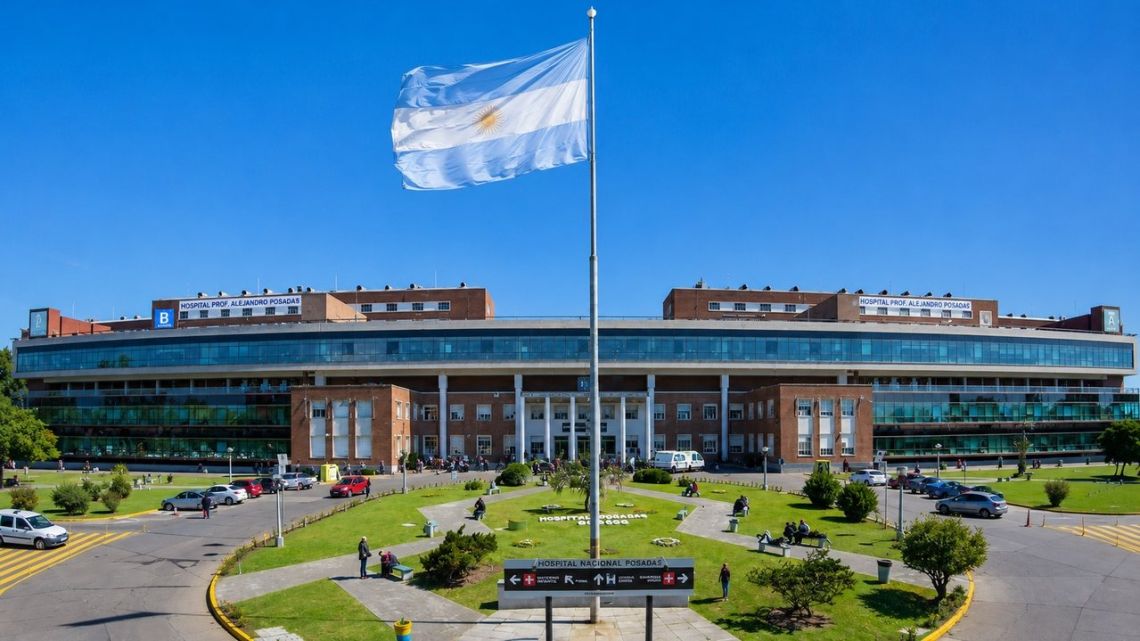
Argentina's federal government on Tuesday began implementing a system to charge non-resident foreigners for non-urgent care at national public hospitals, implementing a 2025 decree by President Javier Milei that amended the country's Migration Law.
The measure was formalised through Resolution 1066/2026, signed by Health Minister Mario Lugones and published in the Official Gazette, with the government saying it was aimed at cutting costs and combating what it calls "medical tourism.”
The resolution applies specifically to hospitals and other healthcare establishments administered by the national government, rather than to all public hospitals across the country.
Milei’s presidential spokesperson Adrián Ravier said the move would not impact life-saving emergency care, which "must not be delayed."

The Health Ministry later noted in a statement that "cardiac arrest, heart attacks, strokes, severe trauma, massive haemorrhages, extensive burns, and obstetric, paediatric, or neo-natal emergencies" would remain free of charge.
Foreigners who cannot prove permanent residency must present valid health insurance covering the treatment or pay the applicable fee before receiving care.
Patients with valid health insurance will have their insurer billed for the cost of treatment, while those without coverage will be presented with a bill before receiving non-emergency care.

Foreigners with permanent residency will continue to have access to the national public healthcare system on the same terms as Argentine citizens.
The changes would also appear to be limited by the fact that Argentina’s health system is largely run by individual provinces, except some regional hospitals managed at the federal level.
As a federal country, the national executive can only decide on hospitals under its control, while the provinces have autonomy to adopt their own regulations.

Some provinces bordering other countries, including Jujuy, Salta, Santa Cruz and Mendoza, already charge non-resident foreigners for certain healthcare services.
Milei, a self-declared "anarcho-capitalist," has repeatedly argued that the cash-strapped Argentine state should not be extending its largesse – including free healthcare – to foreigners who do not pay tax.
Ravier described the policy as ending what he called one of the "greatest scourges" for taxpayers: funding healthcare for foreigners who do not live, work or pay taxes in Argentina.

His spokesperson emphasised on Tuesday that the move targeted "medical tourism", a phenomenon he described as people coming into the country, receiving treatment at a public hospital, and then returning home.
Ravier did not provide any estimates on how large the phenomenon actually is.
The 2025 decree also established stricter requirements for obtaining residency and citizenship, introduced faster deportations for people who commit crimes and authorised national universities to charge non-resident foreign students for tuition.

In emergencies, treatment cannot be denied, restricted or delayed because of administrative procedures, regardless of the patient's immigration status. Whether a case qualifies as an emergency will be determined by the treating healthcare professional.
Milei's opponents argue that the measure is an excuse for his libertarian government to further underfund the public health system.
Nicolás Kreplak, health minister of Buenos Aires Province – the country's most populous region that is governed by the Peronist opposition – estimated that only "0.4 percent of emergency room visits and 0.5 percent of hospitalisations" involve non-resident foreigners.

"The healthcare system is overburdened due to a lack of resources, not because of foreigners," he told the Infobae news portal on Tuesday.
– TIMES/AFP/NA













Comments