

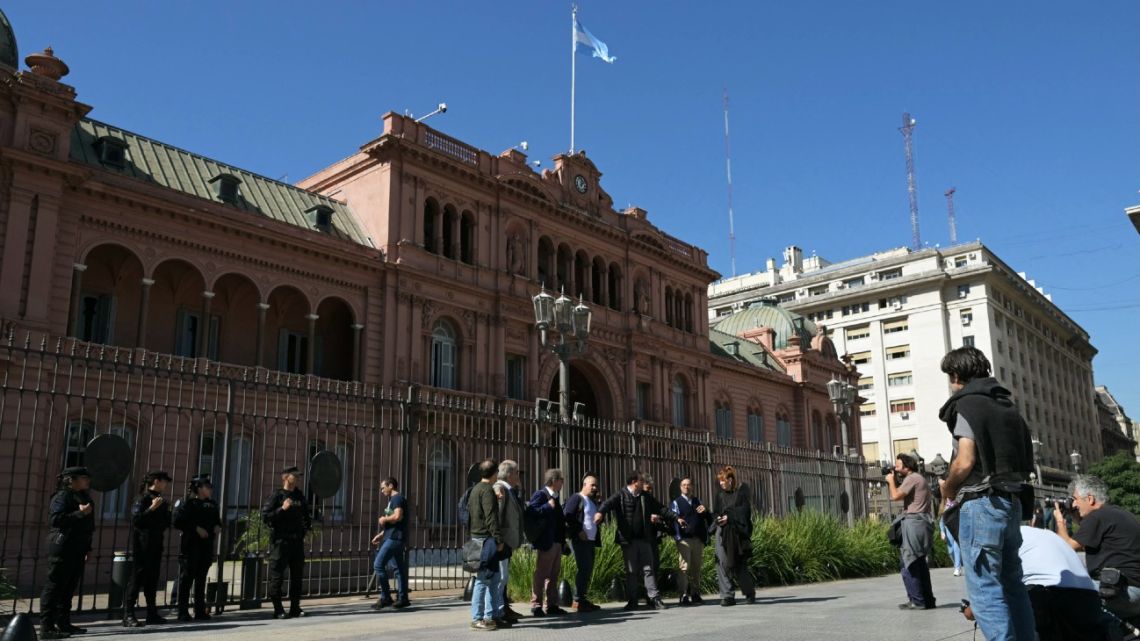
Accredited journalists will be allowed back into the Casa Rosada, the seat of Argentina’s government, on Monday after more than a week of restricted access prompted by allegations of espionage.
Access will initially be limited to designated areas, with some sections of the presidential palace remaining restricted.
The decision, confirmed by a government source on Thursday, comes ahead of a highly anticipated press conference by Cabinet Chief Manuel Adorni at the presidential palace, scheduled for 11am.
The news overturns unprecedented restrictions on press reporters working at the Casa Roada, which have been in place since April 23. President Javier Milei’s Milei government barred around 50 journalists from their usual workplace, effectively shuttering the Casa Rosada press room for a full week – a step with no precedent since Argentina’s return to democracy in 1983.

The ban drew criticism from press associations, opposition figures and the leaders of the Catholic Church.
Milei’s government initially defended the restriction as a “preventive” step to safeguard national security, according to presidential spokesman Javier Lanari in a post on social media. The move also included the removal of fingerprint access permissions for accredited journalists.
The measure followed a complaint by the Casa Militar, the unit responsible for security at the presidential palace, over allegedly unauthorised filming for a programme on the Todo Noticias channel.

The complaint accused two TN journalists from the broadcaster of “espionage,” alleging they had filmed in supposedly restricted areas without authorisation. The reporters maintained they had permission and said the areas in question are routinely visited, including by schoolchildren on organised tours.
Last week, the Ámbito Financiero newspaper filed a legal injunction against the measure, which came just weeks after journalists from some media outlets were blocked from entry to the Casa Rosada following another row over alleged fake news.
The Buenos Aires Press Union, SIPREBA, also prepared similar action pushing for reporters to return to the presidential palace.

Domestic media watchdog ADEPA complained that the press ban “directly impacts freedom of expression and the right to information, fundamental pillars of the democratic system.”
The Asociación de Entidades Periodísticas Argentinas and Foro de Periodismo Argentino press associations have also expressed concern.
Earlier in the week, Archbishop Jorge Lozano, a spokesman for the Argentine Episcopal Conference, visited Plaza de Mayo to express solidarity with the barred journalists and called on the government to open channels of dialogue.

=The partial reopening suggests the government is easing, rather than fully reversing, the contested measure.
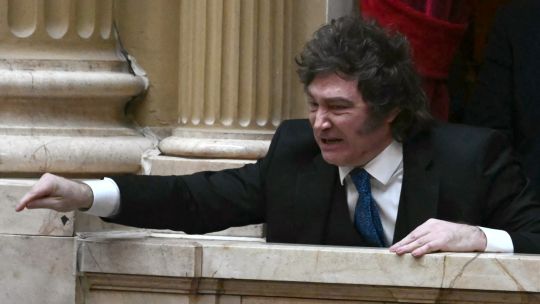
Milei has maintained a tense and angry relationship with the press, frequently using insults such as “filthy” and “corrupt” to describe journalists.
On social media, he regularly shares the acronym “NOLSALP” – short for “No odiamos lo suficiente a los periodistas,” or “We do not hate journalists enough”.
– TIMES/AFP/NA









Comments