


A statement signed by more than 80 figures from Argentina’s academic, legal and cultural worlds says it recognises the nation’s sovereignty dispute with the United Kingdom but rejects the idea of the “Malvinas cause” as speaking for all Argentines, warning that a new government bill could penalise dissent.
The group of 85 intellectuals, academics, legal scholars and former officials published ‘Malvinas and dissidence’ on Tuesday. The text distinguishes between the sovereignty dispute over the islands, which the signatories recognise as legitimate, and the “national cause” of the Malvinas, which they say seeks to impose an imaginary unanimity that leaves no room for dissent.
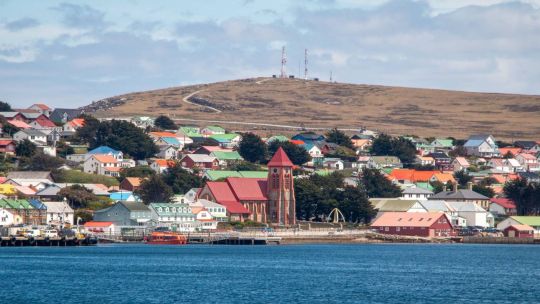
The signatories start from their recognition of the legal, political and diplomatic dispute with the United Kingdom, backed by a United Nations General Assembly resolution urging both sides to negotiate, as well as a transitory clause in Argentina’s National Constitution affirming Argentine sovereignty over the Islas Malvinas (known as the Falkland Islands in the UK) and committing the country to recovering the islands by peaceful means.
Within that framework, they acknowledge differences among themselves as to the role of the islanders in any eventual negotiations, the merits of cooperating with the United Kingdom and the interpretation of the constitutional clause.

The statement rejects the transformation of the dispute into a cause which, according to the text, “admits no relevant dissent in any dimension” and portrays anyone who feels alienated from it as a bad Argentine. It recalls that the 1982 war, launched by a military dictatorship, was possible in part because the cause was already installed in society, as demonstrated by popular support for the occupation. Today, the signatories argue, that dynamic extends into sport, political discourse and “worrying outbursts of militarism.”
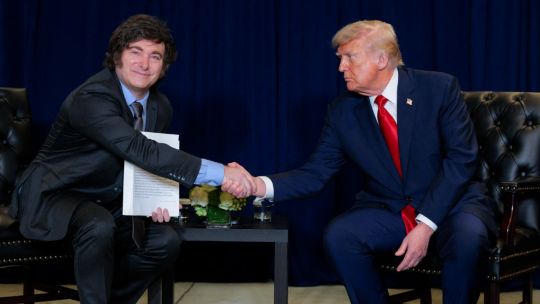
The signatories accuse President Javier Milei’s government of acting on the issue with “a flagrant opportunism,” warning that the administration’s “Defence of National Sovereignty bill,” centred on the Malvinas, contains a provision in Article 111 with a vague definition of a crime that could be used to penalise dissent.
“We differentiate very clearly between the dispute, which permits us the freedom to make discrepancies in liberty, and the Malvinas cause, which seeks to engulf us in a collective, uniform and purely imaginary unanimity,” the text says.

It concludes with a request: “That this unanimity ceases to speak in our name.”
Argentina and the United Kingdom have disputed sovereignty over the Malvinas since 1833, when British forces took control of the islands, which Argentina had claimed as part of its territory.
The dispute has remained unresolved despite repeated calls from the United Nations for the two countries to resume negotiations.

The sovereignty dispute led to the 1982 war, when Argentina’s military dictatorship occupied the islands on April 2. Britain sent a task force to retake them, leading to the surrender of Argentina’s forces after 74 days of fighting. The conflict left 649 Argentine and 255 British servicemen dead, as well as three islanders.
Successive Argentine governments have continued to press their claim through diplomatic channels, but the United Kingdom maintains that the islanders have the right to determine their own future and reject negotiations over sovereignty.
– TIMES















Comments