

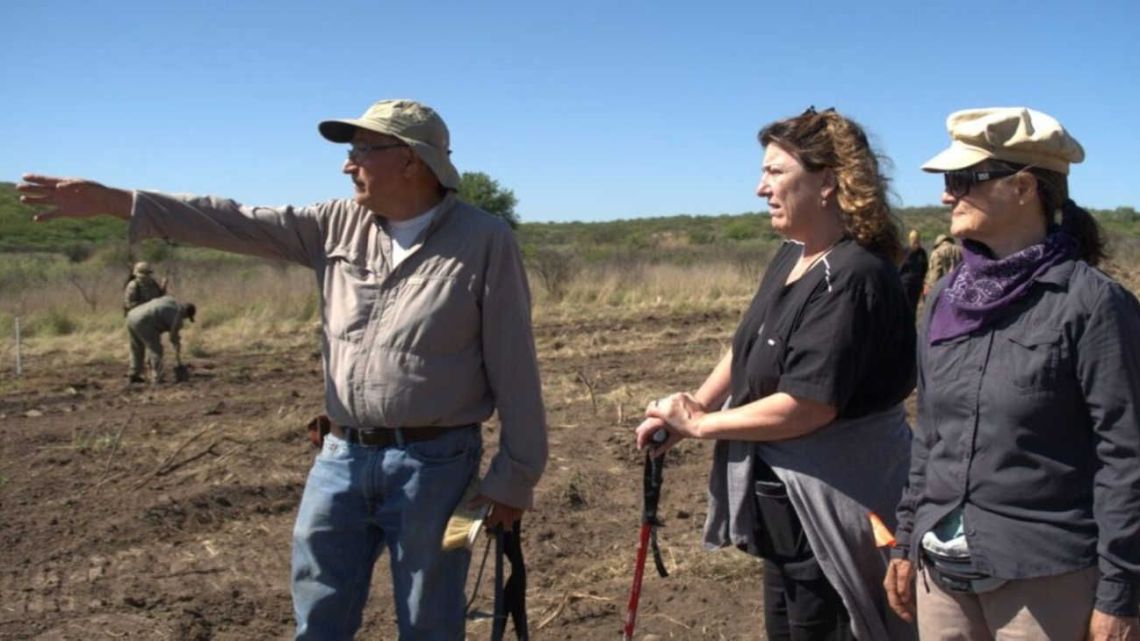
A federal court in Córdoba confirmed Tuesday that experts have identified the remains of 12 victims of Argentina’s last military dictatorship (1976–1983) previously unknown to investigators.
The remains – including a femur, skull fragments and other bones – were discovered within the grounds of the La Calera military garrison, where the clandestine detention centre ‘La Perla’ once operated in Córdoba Province.
The fragments were uncovered during excavations led by the Equipo Argentino de Antropología Forense (Argentine Forensic Anthropology Team, EAAF), the internationally renowned team that identifies victims using DNA testing and forensic analysis of skeletal remains.
The team of experts used ground-penetrating radar technology and soil analysis to detect unnatural earth movements before excavations began.

According to a statement released by Federal Court No. 3 of Córdoba, the 12 victims were identified through “anthropological and genetic analyses carried out by the EAAF on skeletal remains recovered at the La Calera Military Garrison,” where the La Perla detention centre once operated.
The discoveries were made in an area of mass graves within the grounds that belonged to the Third Army Corps.
The court overseeing the case must first inform the victims’ relatives of the findings. Only afterwards – and if the families consent – will the identities of those recovered be made public.

Sources with knowledge of the case say both male and female remains were found. Forensic tests indicate the victims had injuries that were consistent with gunshot wounds.
The remains were discovered in September 2025 following excavations on a site known as Loma del Torito, part of the La Calera military garrison.
The excavations were carried out partly in response to a complaint filed nearly 40 years ago by human rights activist and Nobel Peace Prize laureate Adolfo Pérez Esquivel and relatives of the disappeared.

The positive ID comes as Argentina prepares to mark the 50th anniversary of the March 24, 1976 coup d’état that brought the military junta to power.
Human rights organisations estimate that around 30,000 people were forcibly disappeared during the dictatorship. But since taking office in December 2023, officials in President Javier Milei’s government have repeatedly questioned that figure.
Every March 24, hundreds of thousands of people take to the streets across Argentina to demand justice for the victims and information about their fate – details that many former military officials have consistently refused to disclose.

La Perla, located around 20 kilometres from the city of Córdoba, operated under the control of Argentina’s Army and was the site of mass crimes against humanity. Hundreds of similar clandestine detention centres operated across the country during the dictatorship.
Today, the site is a remembrance space that promotes human rights, with various activities, permanent exhibitions and guided tours.
Between 2,500 and 3,000 people passed through La Perla between 1976 and 1978, according to estimates from Córdoba’s Provincial Memory Archive.

The clandestine detention centre was run by late Army general Luciano Benjamín Menéndez, one of the most powerful military figures at the time, who was later sentenced to 13 life sentences after being found guilty of crimes against humanity.
– TIMES/AFP/PERFIL











Comments