

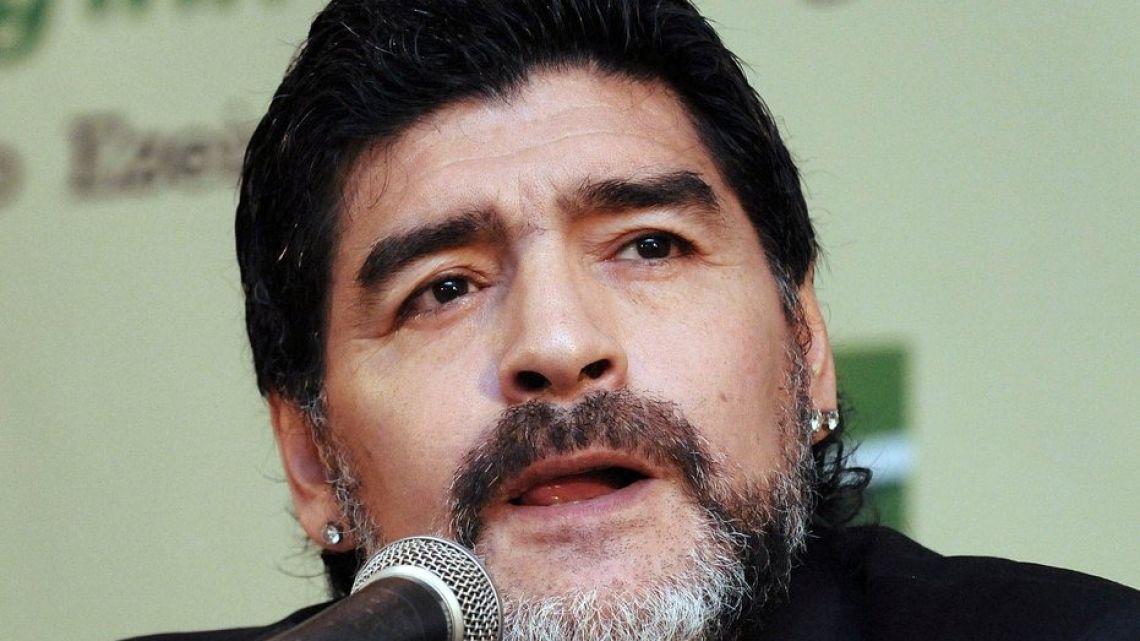
Diego Maradona should have been admitted to a “rehabilitation facility” due to alcohol withdrawal symptoms following neurosurgery, rather than being taken to the home where he died in 2020, an expert told the trial investigating the 60-year-old icon’s death on Tuesday.
“He was not in his right mind. He was going through withdrawal, which made him very difficult to manage ... He should have gone to a rehabilitation facility,” said internal medicine specialist Ramiro Larrea, who took part in a special medical board that examined the circumstances of Maradona’s death.
Maradona died of cardiorespiratory arrest and pulmonary oedema on November 25, 2020, while receiving home care. The appropriateness of that arrangement, the conditions in which it was provided and the care he received are at the heart of the trial.
“A home hospitalisation arrangement was put in place that was not really such a thing. It was more like home monitoring,” Larrea said of the decision to transfer the football star to a house in Tigre, north of Buenos Aires, after surgery for a subdural haematoma.

“Psychomotor agitation, impulsivity, irritability, attempts to escape” were among the symptoms and behaviours Maradona displayed while still at the clinic after the operation, psychiatrist José Luis Covelli told the court in San Isidro, near Tigre, earlier on Tuesday.
Covelli, who also took part in the medical board, agreed with Larrea. “He was a patient who should have been admitted to an institution,” he said.
The psychiatrist added that the Argentine icon was suffering from a “confusional syndrome related to alcohol withdrawal."

The two doctors’ testimony came two weeks after one of the defence teams discovered that some of the kidney tests used by the medical board in reaching its conclusions had in fact belonged to Maradona’s father, who was also named Diego.
Seven healthcare professionals are accused of homicide with dolo eventual, a legal concept meaning they were aware that their actions or omissions could lead to Maradona’s death. All have pleaded not guilty and face up to 25 years in prison.
The trial began in April and could continue until October.
– TIMES/AFP













Comments