

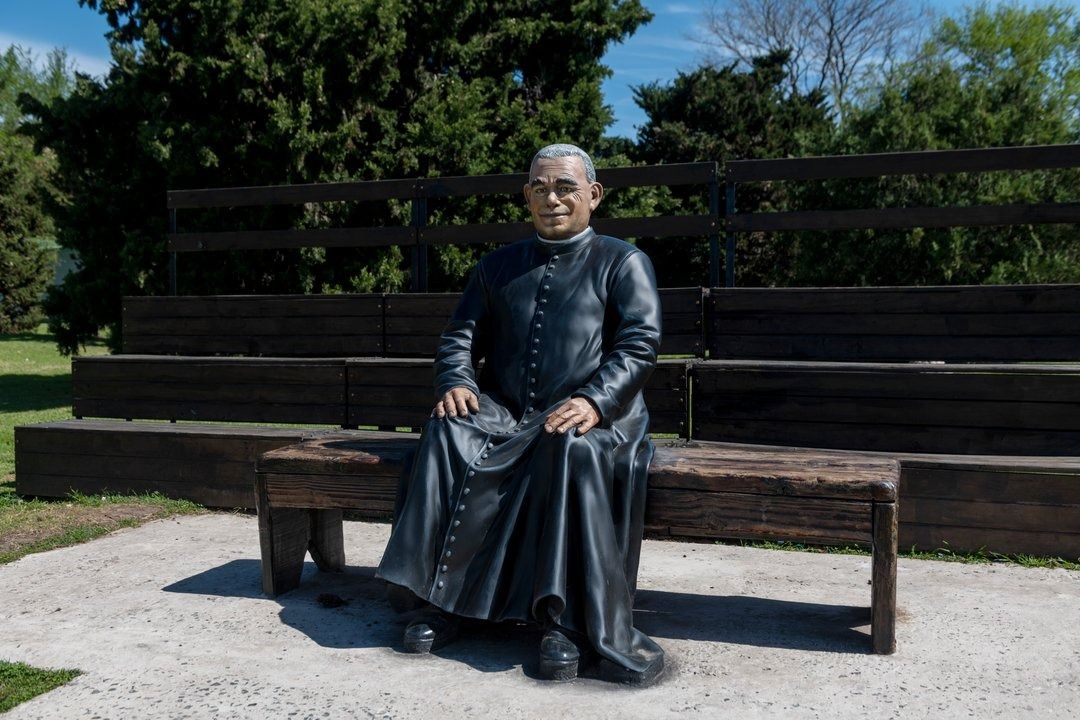
“Cottolengo” is a word that is commonly used in Argentina to describe a place in chaos and disarray. But at the Cottolengo Don Orione in Claypole, Buenos Aires Province, one learns that prejudices often lead us to the wrong ideas.
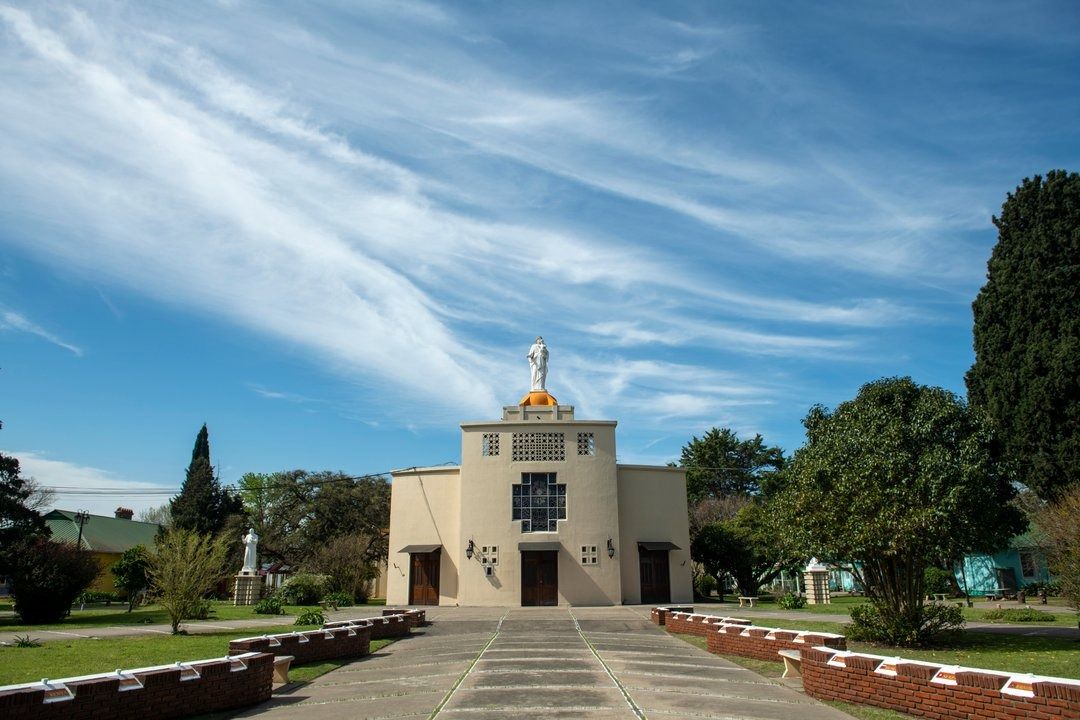
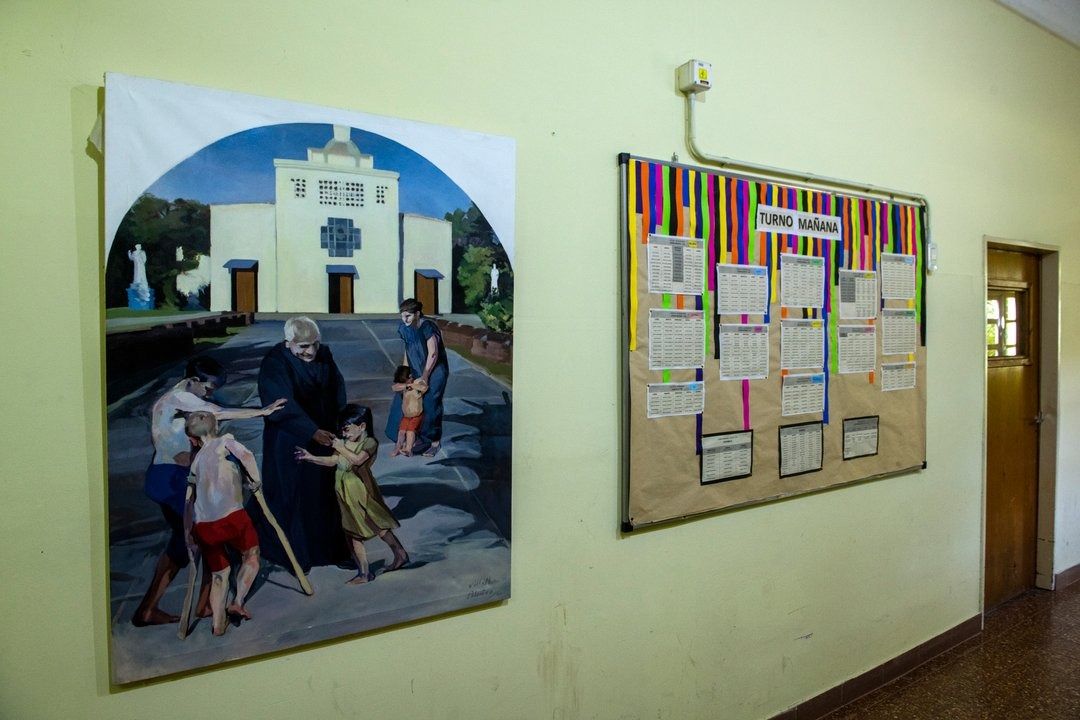
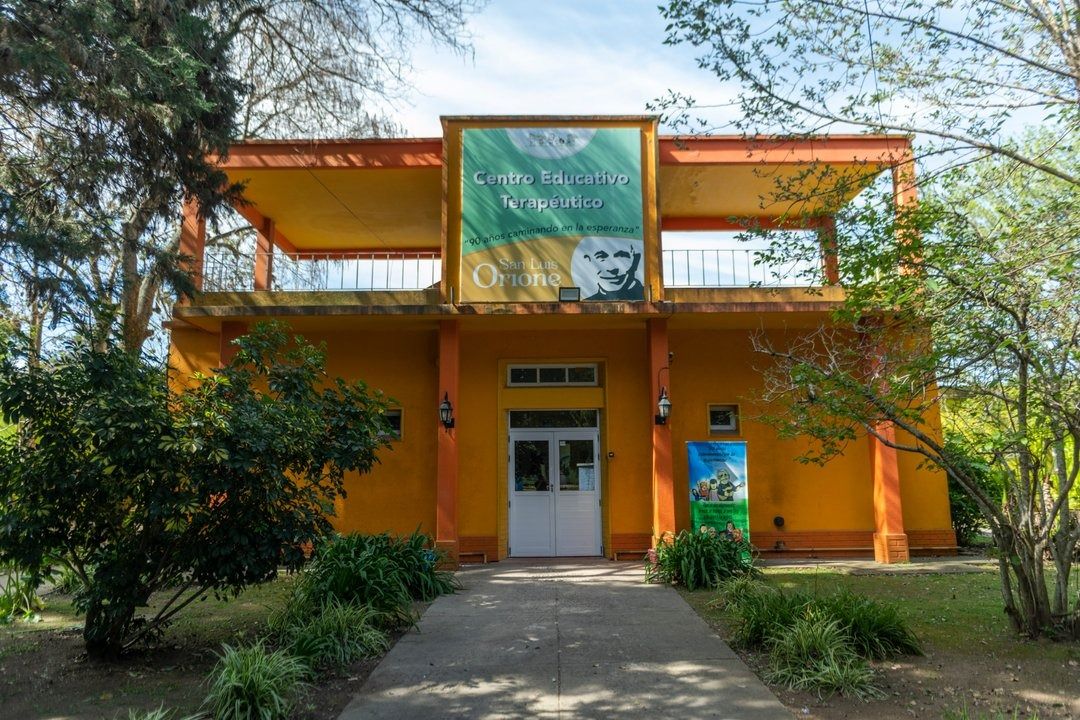
Cottolengo Don Orione – which Pope Leo XIV is due to visit on Monday, November 9 – was inaugurated on May 21, 1936. For the last 90 years, it has been run with the same mission in mind: bringing quality of life and happiness to the disabled.
The institution is located in the Almirante Brown district of Buenos Aires Province, houses 410 residents and provides work to 400 employees. But in reality, the workers are more than just employees – they are the friends and family of those who dwell there.
“Cottolengos are institutions belonging to the Don Orione charity, providing a service technically termed a permanent home for the disabled and a day centre,” explained Father Aníbal Quevedo, a priest of the Don Orione charity and a provincial advisor for operations in Argentina, Uruguay and Paraguay.

Cottolengo Don Orione has a particular feature, as highlighted by the Chaco-born priest. It is the reason why the institution is in operation each day.
“The particular feature of Don Orione is why we do what we do – we believe this is what the Gospels ask of us, we want to do good,” said Quevedo. “In the Gospels, Jesus says: ‘Whatever you did for the least of my brothers and sisters, you did unto me.’ So we understand that vulnerable person with limitations and in a situation of demanding help and support to be Jesus.”
“Therefore we want the best for that person. The best at other times was a meal, a roof over their heads and minimal medical care. Those days are gone and what is now offered to those living in Cottolengo is a quality of life which implies getting to know the person, their tastes, wishes and ideas – i.e. getting to know them so as to give them what they ask on the basis of their possibilities.”

Consequently, “what the Cottolengo seeks is for disabled people to find happiness,” he added.
Funding tranquility

Upon arrival, the first noticeable detail is the green areas with different types of trees. It’s a landscape of peace and tranquility complete with birds singing.
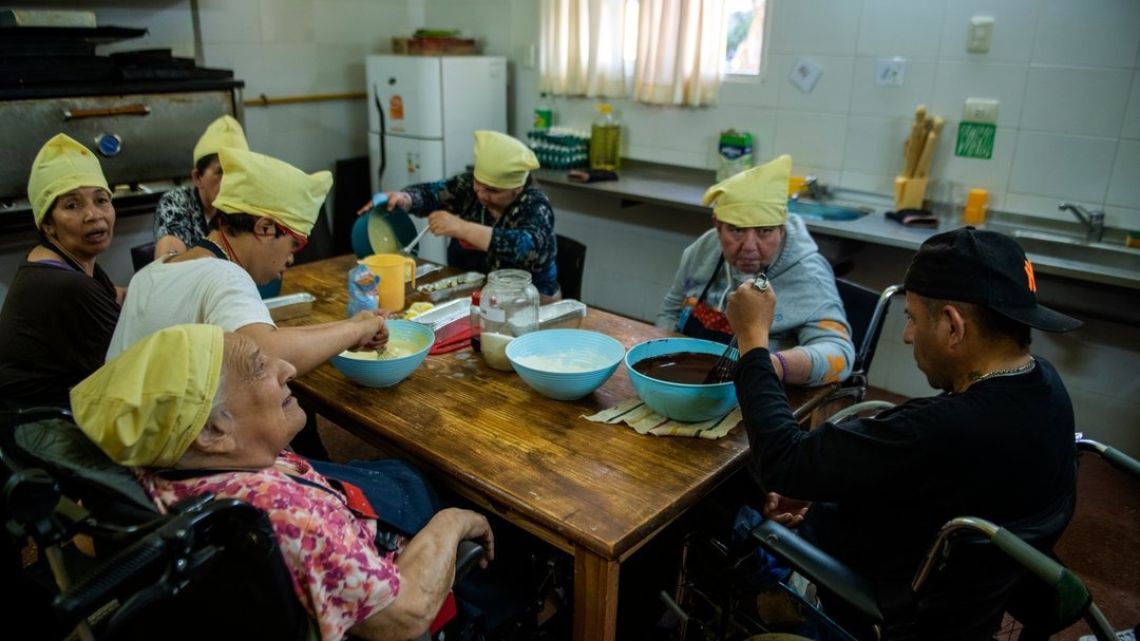
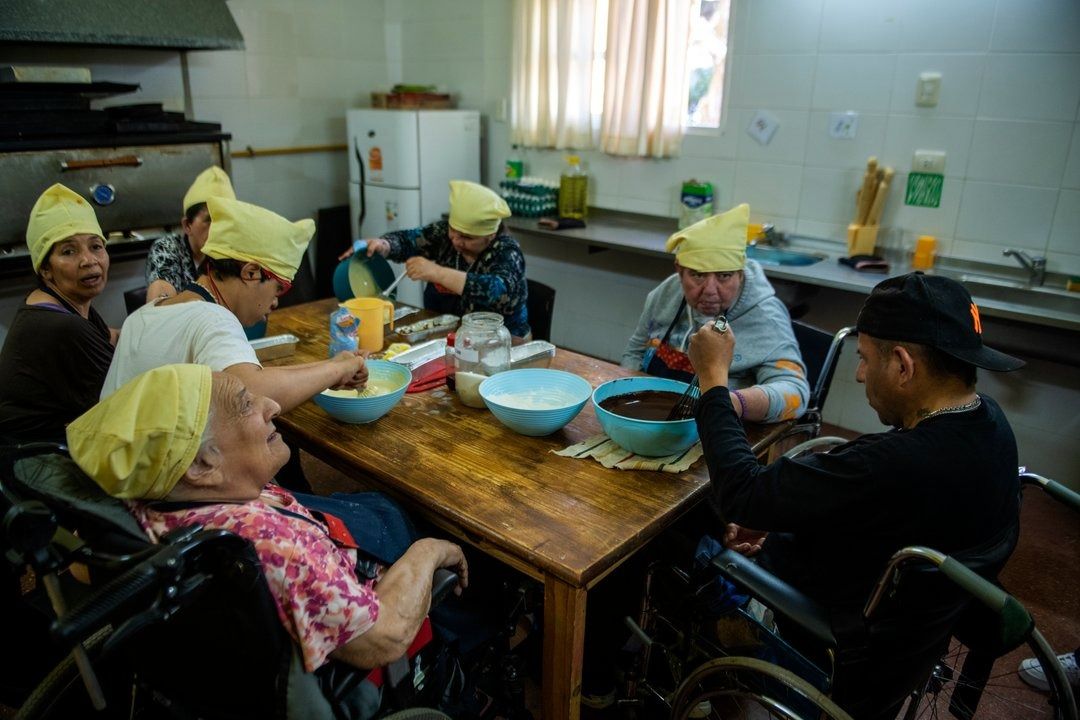
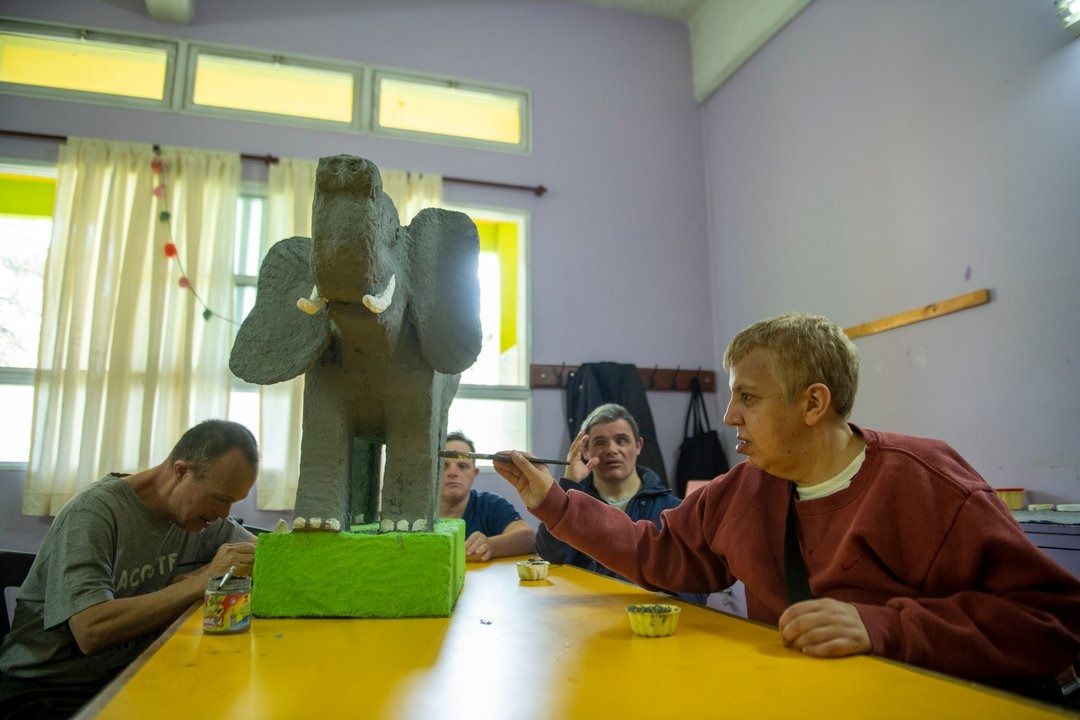
The 410 permanent residents carry out different types of activities: workshops for cooking, dancing, gardening and current events, among others, as well as hikes and masses.
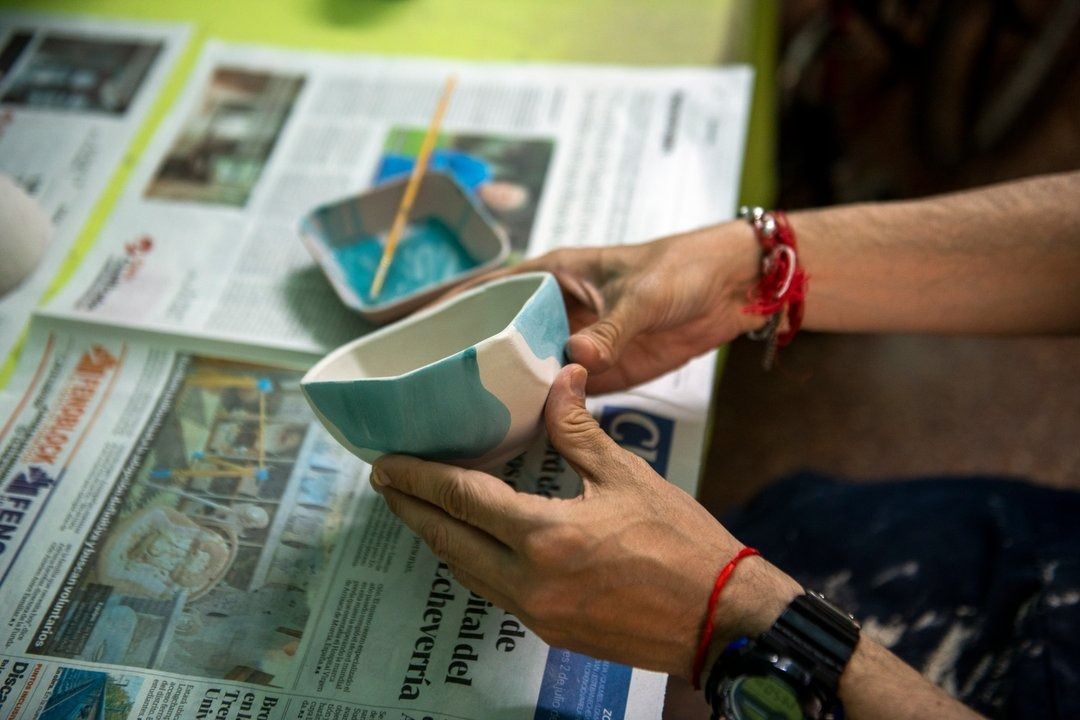
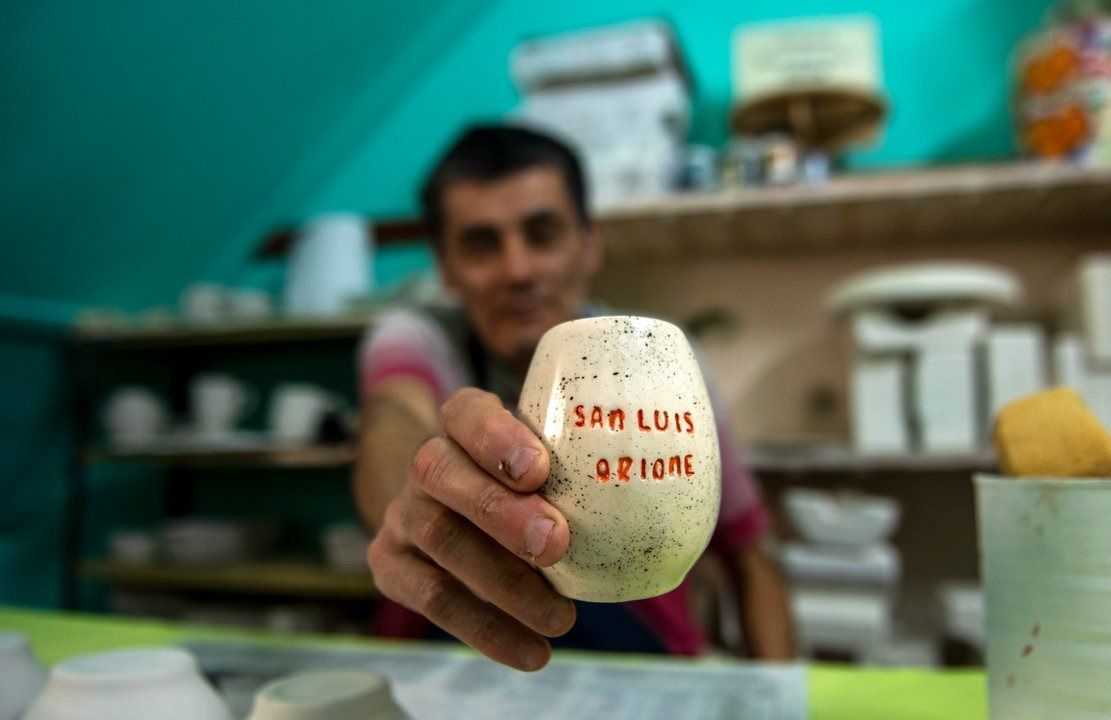
The happiness of the residents could be seen as they danced to rock & roll music, made chocolate and vanilla pound cake, worked on pottery, notebooks and made figures like elephants and giraffes at the recycling workshop.

Quevedo said that he is in charge of the current events workshop, where “they have to bring up the issues which they heard on television and which caught their eye for us to discuss and debate later.”
“They come up with topics like inflation, for example, or any current events issue. We put all the issues on the table for discussion and debate,” shared the priest.
“Such is the life of a disabled person at the Cottolengo,” he reflected. “We do it because we want to abide by the Gospels in a concrete way.”

You might easily say with all problems in the [disability) area, that dedicating yourself to something else would doubtless be easier.
“But we want to do what we do because we’re convinced it’s a way Don Orione has found to show that God loves us despite our personal limitations – physical or mental in this case but other people may have other limitations,” he underlined.
As for how the Cottolengo is maintained, Quevedo explained that it is funded “basically via the healthcare programmes of people living at the Cottolengo plus the profile our work has given us with PAMI [healthcare of the elderly] and Incluir Salud,” adding that “there is also a non-contributory PAMI which is worse off than the PAMI for the pensioners.”

“Out of these three schemes, PAMI is the best,” he pointed out, highlighting: “That also marks out our target groups.” adding that in certain cases they have “provincial social insurance schemes … shifting our scope.”
Besides the healthcare schemes, “there are extraordinary donations since, as I understand it, being credible, we receive different things at different times.”
Rounding out, they do fundraising for those who wish to contribute financially so that different needs of the Cottolengo can be purchased, such as, for example, a specific trolley for transferring food. Fundraising is essential for NGO projects.
‘Within the reality’
The visit by the Supreme Pontiff to Cottolengo Don Orione on Monday, November 9 will take place in a context where the disabled have become politically controversial in Argentina due to the spending cutbacks in the 2027 Budget.
On being consulted on this issue, Father Aníbal clearly stated: “The Cottolengo is undergoing the same thing as any institution because it is within the reality of the disabled nationwide, which is complex due to the back and forth, because we have a statute which at one time was at the cutting-edge in Latin America, Law 24.901, obliging insurance companies to offer a service meeting personal needs but which later went unheeded or only in part.”
He then focussed on the importance of the “nomenclature,” which, he explained, “is basically a price list,” indicating by way of example: “Speech therapy is so expensive so if you need speech therapy, the healthcare scheme has to pay the sum indicated in the nomenclature. The particular feature is that the service has a price but when there’s no price, you end up agreeing on it with the insurer and that’s when you create the position of some people having an income and healthcare scheme enabling them to pay more for that service.
“That causes the scenario within the health sector that if a professional can be paid twice or thrice more by one side than the other, which are they going to choose?”
Therefore, he warned that the possibility of “the nomenclature disappearing carries the risk of people having different types of access when that access is guaranteed by the nomenclature,” which is how “the whole reality experienced by the disabled in Argentina also affecting their families and institutions passes over to Cottolengo. We have the same difficulties.”
He pointed out: “We’re a non-profit organisation so our surplus at the end of the fiscal year is invested back into the institution but even with that, we find it complicated” although “if we’re having a rough time, the rest of the sector must be worse-off.”
As for whether that complexity took the concrete form of cutbacks, for example,in food or supplies needed for the different workshops, the priest responded in the affirmative but with a caveat: “This wouldn’t be the worst time of the year, we were doing worse in March and around Easter” because “payments were delayed.”
As for the present, he indicated: “The dynamics have improved nowadays but payments are being reduced and things we had before are lacking so we have to invest more into those needs.”
Given this panorama, he stressed that the Cottolengo “houses people with ideals, dreams, stories, they’re not just a treatment, expensive medication or 100 nappies a month – they are people.”
As for the response from the authorities, he said: “At one point we had conversations with authorities from Senadis (Secretaria Nacional de Discapacidad),” remarking: “We’re no different nor do we request anything different [from the rest of the sector].We do our duty like everybody else.”
Is it hard to make people understand the needs of the disabled sector? “Yes, it is,” he admitted, though “as I understand it, it is easy to realise that the austerity policies of the national administration harm the disabled.”
On this point, the priest stressed that Cottolengo Don Orione “keeps a low profile” so that “you won’t see me hurling insults or running people down.”
“In general, what we seek is a low profile and to work for our residents without trying to convert or politically recruit people,” he remarked. “We’ve been doing this for 90 years and we aim at continuing. The current situation is cyclical and we are riding it as we have done throughout these past 90 years.”
Papal visibility
It is in these circumstances that Pope Leo will visit Cottolengo. For Father Aníbal, it is “an extraordinary blast to have the papal presence, the shepherd of the Church coming to visit this country, which hasn’t happened for 39 years and to have everything going on because of this news.”
Therefore, “for us the Pope’s visit means a visibility which it seems to me we never had at this personal level.”
“It’s easy to see why the media are coming these days,”he confesses.
The disabled sector “has been made invisible and that goes for the Cottolengo” too, Quevedo maintained.
“I never sat down in a television programme to talk about Don Orione with journalists and nor did they ask me what I thought about Cottolengo Don Orione or such issues. It didn’t happen before and now it’s happening due to the papal visit.”
When consulted about what the Supreme Pontiff’s visit means for those working at the institution and its residents, he answered: “This brings us joy that people can understand the objectives sought by Don Orione and are brought closer to the Pope.”
He continued: “Don Orione said that he was going to work via charity for these people’s needs so that they understand who the Pope is and what the Church does as well.”
And here at Cottolengo, “the education we supply is that we are the Church which for the last 90 years has been providing this service.”
“So to say we are opponents of anything... we don’t oppose anybody or anything,” he asserted, underlining: “We are an institution which for the last 90 years has been working with so many people at the Cottolengo, the largest number in Argentina, we dedicate ourselves to that.”
To think that we form any kind of opposition shows “a very biased outlook,” said the priest.
Given the complex situation facing the disabled sector and, in consequence, the Cottolengo, as he describes, Father Aníbal hopes that “the Pope’s visit will help make visible the sector of the handicapped in Argentina.”
A”key interpretation of the visit is Item 16 of his encyclical Magnífica Humanidad, which reads: ‘To all men and women of good will. Let us not be afraid to get our hands dirty in the “construction site” of our times, working towards and committing ourselves to a society which has God on its horizon and people at the centre of its decisions. Keeping people, not ways of thinking, at the centre.”
“That is what the Pope invites us to do with his discourse and I understand that this will be the key to his entire visit but above all, his presence at Cottolengo,” said the religious leader.
‘Big family’
Besides the obligations of the authorities towards the disability sector, the priest also referred to social action, considering that “we can do better.”
Even though “the theoretical models and schemes are probably not going away, the terminology has been changing. Historically the term was “handicapped,” then afterwards it was thought to stigmatise them and it was changed to “special needs” and now the term used is disabled persons.”
He maintained: “This kind of thing which seeks to aid and bring disabled people closer is a pending issue we have as a society” yet he placed his focus on “how disabled people are viewed.”
“It seems to me that the Pope’s visit will question us all as to what we are doing about disability, our form of handling it and relating to what contributions we can make,” he pointed out, remarking: “The contribution needed by the disabled sector is the energy to dedicate time to accompanying people, listening to them and helping them. That’s what giving energy is all about. For us as a society to be able to do that or grow in that direction seems to me something beautiful to be yearned for from the Pope’s visit.”
That accompaniment is key since “most [of the residents] have no family and among those who do, there are many cases where for different reasons their families are not committed to them,” specified the priest, emphasising: “It’s quite something to take care of, accompany and help to heal life’s wounds, situations they have experienced which today finds them in the Cottolengo.”
For most of them, “their family is Cottolengo, which is why we call it home, the buildings where they live are homes,” he highlighted, continuing: “Cottolengo is one big family, a community for life and a joy for people who at one point had nothing.”
“I’m the director of two Cottolengos, one in Lagos and the other in Rosario, and when I go to visit them and see that two or three of them are going to have a coffee at the bar, I think that’s great because they made that decision or when somebody wants to share milanesas with their fellow-residents for their birthday.”
“What remains to be seen is how to do it because in general, night shift employees have their timetables and when plans are made, somebody has to adjust their hours to be able to accompany them,” he indicated, highlighting: “These are decisions you might think minor but they show self-determination and fills them with joy.”
As a final message, Father Aníbal Quevedo laid emphasis on “the joy over the Pope’s visit being so extensive since the joy does not belong to the Don Orione charity but to the disabled, their families and the people working with them.
Therefore, “let it be everybody’s joy – it’s about giving a special meeting recognition.”
In that sense he recalled: “The pastoral visit of the Pope starts at the Cottolengo on Monday, November 9, the rest is protocol, formal, with authorities. This is the pastoral part.”
“For him to come and visit us is to acknowledge us in a way which is a joy to us all,” he emphasised, concluding: “He seeks to encourage each one of us to ask ourselves as a society what we can all contribute to do our best for the disabled.”
related news
by Agustina Zelayeta, Noticias Argentinas
Image Gallery

Comments