

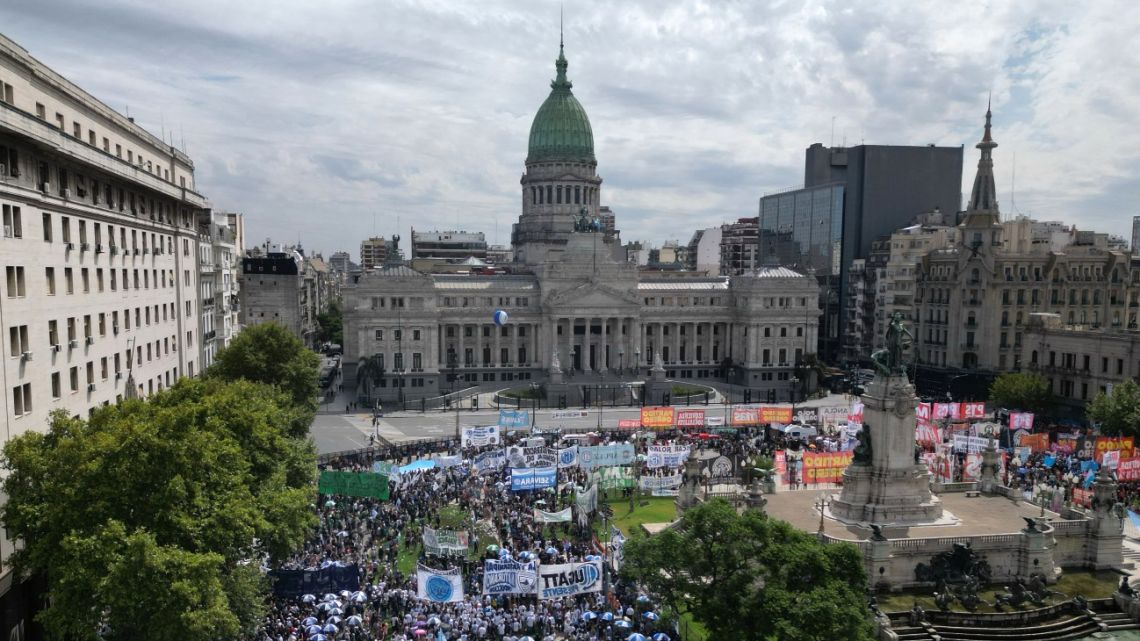
Argentina’s leading trade union federation on Monday called a 24-hour general strike for Thursday, February 19, to challenge the labour reform bill promoted by President Javier Milei’s government.
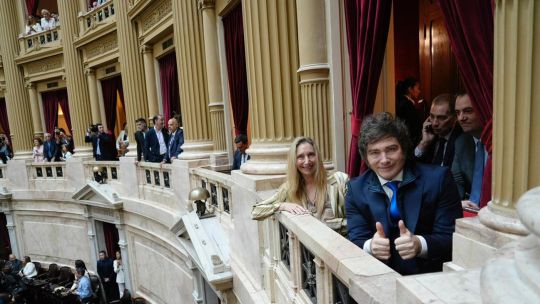
The walkout will coincide with debate on the controversial legislative package in the lower house Chamber of Deputies, said union sources. The bill has already been approved by the Senate and union leaders hope a full transport shutdown will maximise pressure on lawmakers.
The measure is expected to deliver widespread disruption across the country, with its main impact in the Buenos Aires Metropolitan Area (AMBA), the capital and its surrounding suburbs, where millions rely daily on public transport.
Leaders of the Confederación General del Trabajo (CGT), the country’s most powerful umbrella union grouping, confirmed the strike following a meeting of its executive council. It will be the fourth general strike since Milei took office in December 2023.

“As always, each trade union will have freedom of action,” a senior CGT source said, though the confederation called for “total adherence to the stoppage.” Unlike previous protests, CGT leaders are not expected to convene a central rally.
Transport stoppages
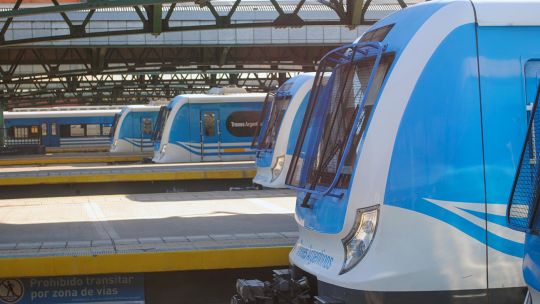
Transport unions have pledged a near-total shutdown of passenger services.
Metropolitan commuter trains will not operate throughout the day due to the participation of the Unión Ferroviaria and La Fraternidad, which represent railway workers and drivers. The stoppage will affect all major AMBA lines: Roca, Sarmiento, Mitre, San Martín, Belgrano Sur, Belgrano Norte and Urquiza.

Buenos Aires’ underground Subte and Premetro services will also be closed, after unions representing underground staff confirmed their participation.
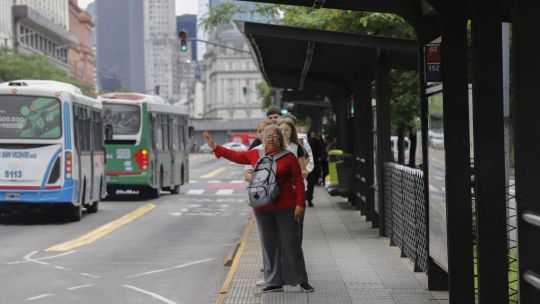
Bus services will be severely curtailed after the Unión Tranviarios Automotor (UTA) announced it would join the strike, meaning most urban and suburban routes are unlikely to run or will operate only minimally.
“We guarantee that all means of passenger transport will be totally paralysed,” the Unión General de Asociaciones de Trabajadores del Transporte (UGATT) said in a statement on social media. “There will be no transport on the day the labour reform is debated by deputies.”

Additional backing has come from the Confederación Argentina de Trabajadores del Transporte (CATT).
Air travel is likely to be heavily disrupted, with cancellations and delays anticipated at Aeroparque Jorge Newbery and Aeropuerto Internacional de Ezeiza due to the participation of aviation unions, pilots and ground staff.
Taxi and private car services are expected to operate at reduced capacity after sector federations signalled support for the strike, potentially compounding problems.

The broad participation of transport unions marks a significant escalation compared with Argentina’s last general strike around 10 months ago, when bus and rail unions did not fully join the stoppage, limiting its impact.
‘Regressive’ reform

The CGT has sharply criticised Milei’s reform bill, stating that it reduces severance packages, permits payment in kind (goods or services), extends the working day to a potential 12 hours and restricts the right to strike.
Union leaders say tensions intensified after the inclusion of a controversial article modifying sick-leave provisions, which they argue would allow wages to be halved during illness-related absences.
Since Milei took office in late 2023, some 300,000 jobs have been lost and 21,000 companies have closed, according to manufacturing sector data.

Union leaders also blame the government for falling industrial output and plunging consumption.
The changes in Milei’s labour reform bill are “regressive” and “unconstitutional,” CGT leaders say. They have vowed to challenge the reform in court if it becomes law, arguing that it violates constitutional labour protections.
Milei’s government counters that the reforms will reduce informal employment, which exceeds 40 percent of the workforce, and stimulate hiring by easing employers’ tax burdens.

Senator Patricia Bullrich, who chairs the Labour Committee in the upper house, met Milei on Monday at the Olivos presidential residence to coordinate strategy ahead of the lower house debate.
Bullrich has insisted that no changes to the Senate-approved text will be permitted, though she acknowledged on Sunday that the government is open to regulatory adjustments to soften the sick-leave article.
The government is seeking to avoid amendments, which would send the bill back to the Senate for a second vote and delay passage.

Milei wants the reform approved before his March 1 state-of-the-nation address inaugurating ordinary parliamentary sessions.
The Senate approved the bill last week by 42 votes to 30 amid mass protests outside the National Congress building in Buenos Aires.
Trade unions, opposition parties and social organisations joined the largely peaceful rally, which later turned violent when protesters clashed with riot police.
More than 30 people were arrested, some of whom the government is now seeking to charge with terrorism offences.
– TIMES/AFP/NA/PERFIL







Comments